
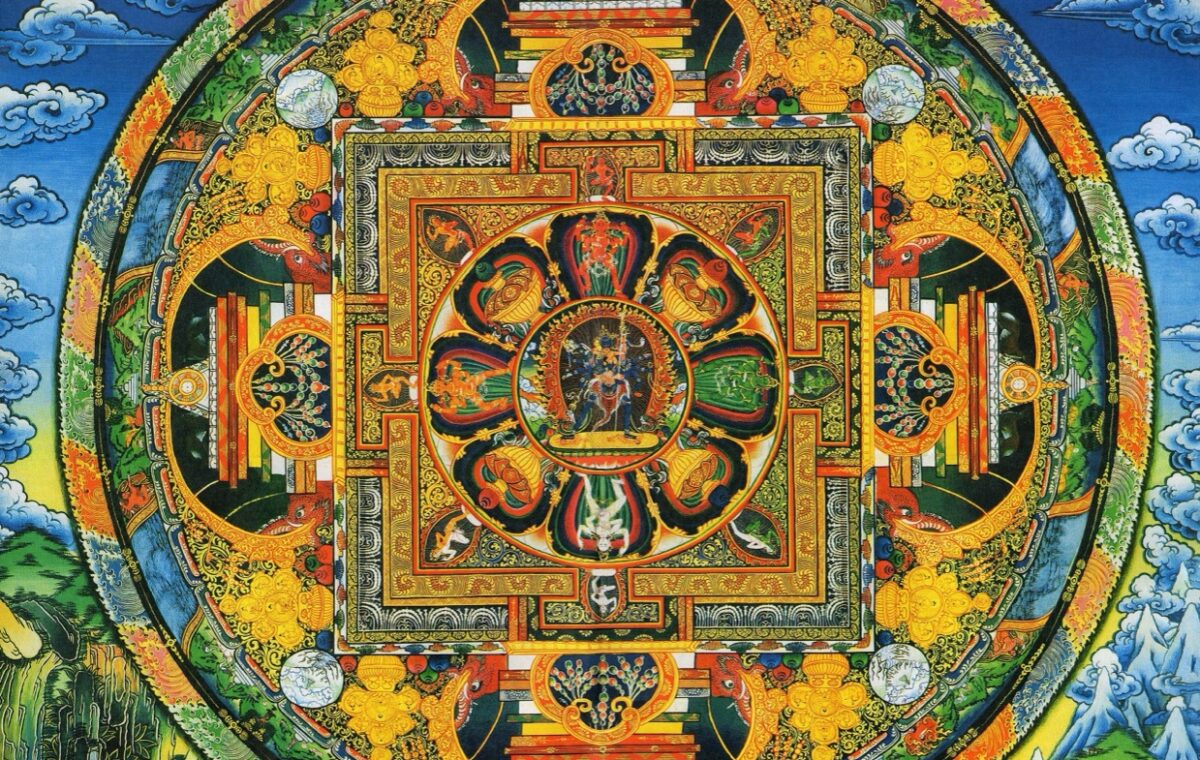
Thangka paintings can appear overwhelming at first glance. A single work may contain a central deity, teachers, protective figures, clouds, flames, lotus seats, offerings, and an architectural world arranged with extraordinary precision. The easiest way to understand a thangka is not to decode every detail at once. Instead, read it in layers. Begin with the main figure, move outward through gestures and objects, and then study the larger composition. This method turns a dense sacred image into a visual system that can be observed, compared, and remembered.
1. Begin with the central figure
Most thangkas are organized around a primary figure or sacred structure. Look first at the center of the painting and ask a few simple questions: Is the figure peaceful or wrathful? Is the body seated, standing, or dancing? How many faces, arms, or eyes are visible? Does the figure sit on a lotus, an animal, or a throne?
These features provide the first clues to identity. A calm seated Buddha with monastic robes is visually different from a richly adorned bodhisattva, while a wrathful protector may be surrounded by flames and wear powerful symbolic ornaments. Do not rely on color alone. Identity is usually established by a combination of posture, attributes, hand gestures, and the figures placed nearby.
2. Observe posture and hand gestures
Posture communicates activity and character. A figure seated in meditation suggests stability and contemplation. One leg extended from a lotus seat can suggest readiness to respond, a feature often associated with Green Tara. A dynamic stance with bent knees may signal active power, protection, or the overcoming of obstacles.
Hand gestures, known as mudras, are equally important. A hand touching the earth is associated with the Buddha’s awakening. An open palm facing outward may communicate generosity or reassurance. Hands can also hold objects that identify the figure: a lotus, vajra, bell, sword, book, vase, wheel, or medicine bowl. When several clues appear together, identification becomes much more reliable.
3. Read colors and sacred objects together
Color in thangka art is rarely decorative alone. White may emphasize purity or longevity, green can suggest active compassion, blue may express vastness or transformative power, and red can be connected with magnetizing activity or enlightened speech. However, the meaning of a color depends on the figure and tradition, so it should always be read alongside other evidence.
Sacred objects narrow the possibilities. Manjushri is often recognized by a flaming sword and a book of wisdom. Medicine Buddha commonly holds a medicine bowl and is shown with a blue body. Avalokiteshvara may carry a lotus or appear with multiple arms expressing compassionate activity. Learning a small group of recurring attributes is more useful than trying to memorize hundreds of names.
4. Move outward through the composition
After examining the center, look above, beside, and below it. Teachers or lineage figures frequently appear near the top. Attendants and related deities may flank the central figure. Offerings, protectors, donors, or guardian figures often occupy the lower area. Their placement creates relationships and can reveal the ritual or historical context of the image.
Symmetry is another guide. Many thangkas balance figures on the left and right, leading the eye toward the center. In a mandala, the composition may be organized as a palace with gates in the four directions, surrounded by circles of lotus petals, vajras, flames, or other protective boundaries. Read a mandala from the outside inward: each layer marks a transition toward the sacred center.
5. Check the title, inscription, and source
Visual analysis should be supported by written information whenever possible. A reliable title, inscription, museum record, or catalogue entry can confirm a figure’s identity and provide details about date, region, lineage, and materials. Clear catalogue titles are especially useful for comparing different cataloguing traditions and searching for related examples.
At the same time, titles can be incomplete or inconsistent. If the written label conflicts with the visual evidence, record the uncertainty rather than forcing a conclusion. Careful observation and transparent naming are more valuable than an unsupported identification.
Build recognition through comparison
The fastest way to improve is to compare several images of the same subject. Place different Green Tara paintings side by side and note what remains consistent: green body color, extended leg, lotus flowers, and recognizable hand gestures. Then observe what changes, such as surrounding teachers, landscape, ornaments, or artistic style.
Repeat this process with Medicine Buddha, White Tara, Avalokiteshvara, Mahakala, and painted mandalas. Over time, recurring visual patterns become familiar. You will begin to recognize a figure before reading the title, while still using catalogue information to verify your interpretation.
A practical viewing method
When opening a new thangka image, follow the same sequence: identify the center, study posture and hands, list the objects, note the dominant colors, scan the surrounding figures, and finally check the title and source. This simple routine slows down the act of looking and prevents the most common mistake—guessing from a single feature. A thangka is not a collection of isolated symbols. It is a carefully organized visual world, and learning to read its relationships is the beginning of understanding it.
Sources and further reading
- Himalayan Art Resources: comparative records for Thangka iconography
- Project Himalayan Art: process of thangka painting
These references support comparative iconographic study. The TANGKAWORLD TK number is an internal catalogue identifier; artist, date, collection history, and provenance remain uncertain unless separately documented.
Download the full Thangka image collection
Continue your study with the complete TANGKAWORLD image library on the Thangka image collection page.