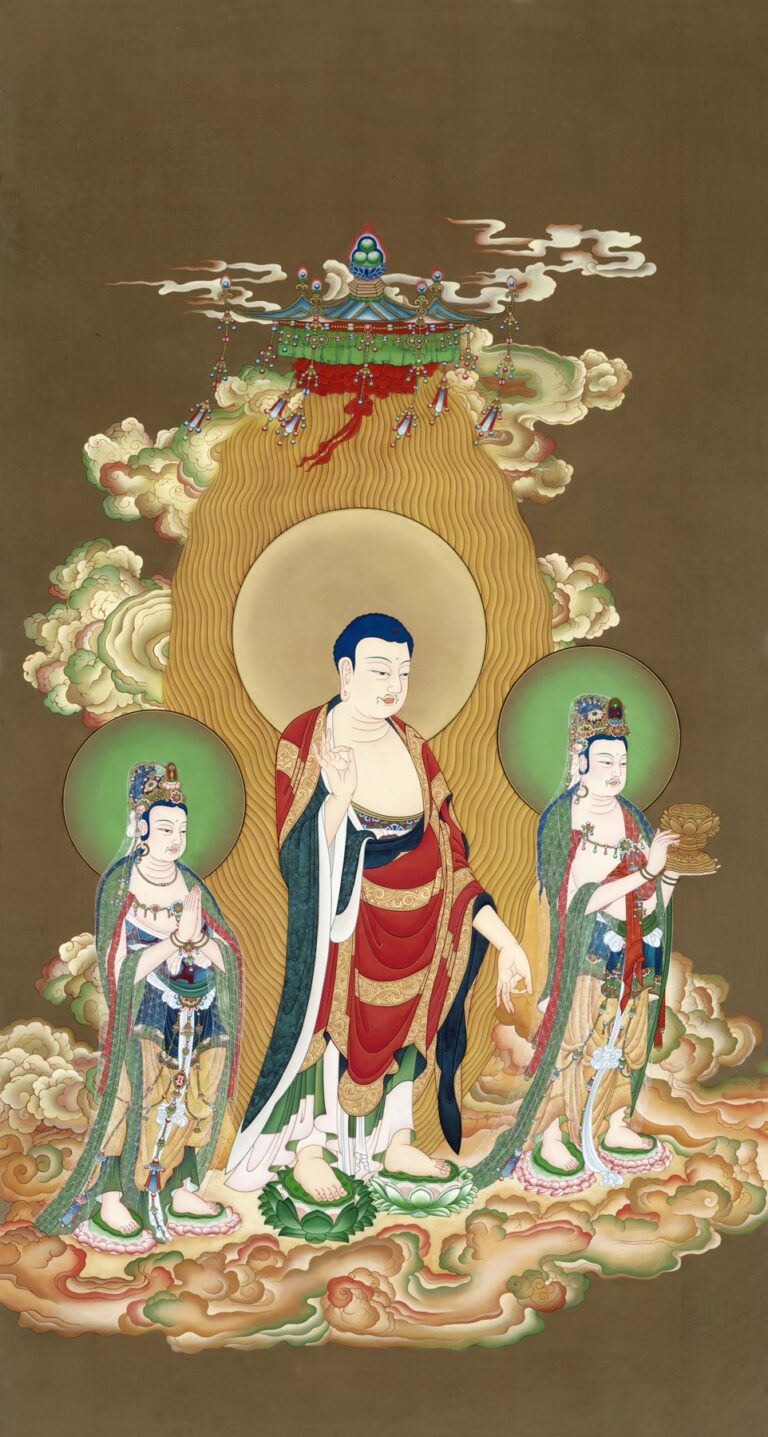
Jeweled Canopy in Buddhist Painting: A Visual Guide
A visual method to document roof-shaped jeweled canopies in Buddhist painting, distinguish them from trees or parasols, and avoid unsupported claims.

Browse the journal
Thangka Basics introduces the visual language of thangka painting for readers who are new to Tibetan Buddhist art. These guides explain how figures, gestures, attributes, colors, halos, lotus seats and surrounding deities work together within a carefully structured composition. They also clarify the difference between a devotional image, an iconographic teaching aid and a mandala used to organize a complete sacred world.
Start by observing the central figure, then move outward through posture, hand gestures, symbolic objects, secondary figures and the landscape. This method makes a complex image easier to understand without reducing it to decoration. The category also covers common formats, materials, proportions and practical vocabulary that can help students compare related works across the Thangka World image collection.
If this is your first visit, begin with How to Read a Thangka: A Beginner’s Guide. It provides a step-by-step framework you can reuse when studying Buddha images, bodhisattvas, protectors and mandalas.
Continue with What Is a Thangka? for essential context, the high-resolution iconography study method for close looking, the Thangka condition report checklist for collection research, and the JPG vs TIF guide for image-format decisions.
A visual method to document roof-shaped jeweled canopies in Buddhist painting, distinguish them from trees or parasols, and avoid unsupported claims.
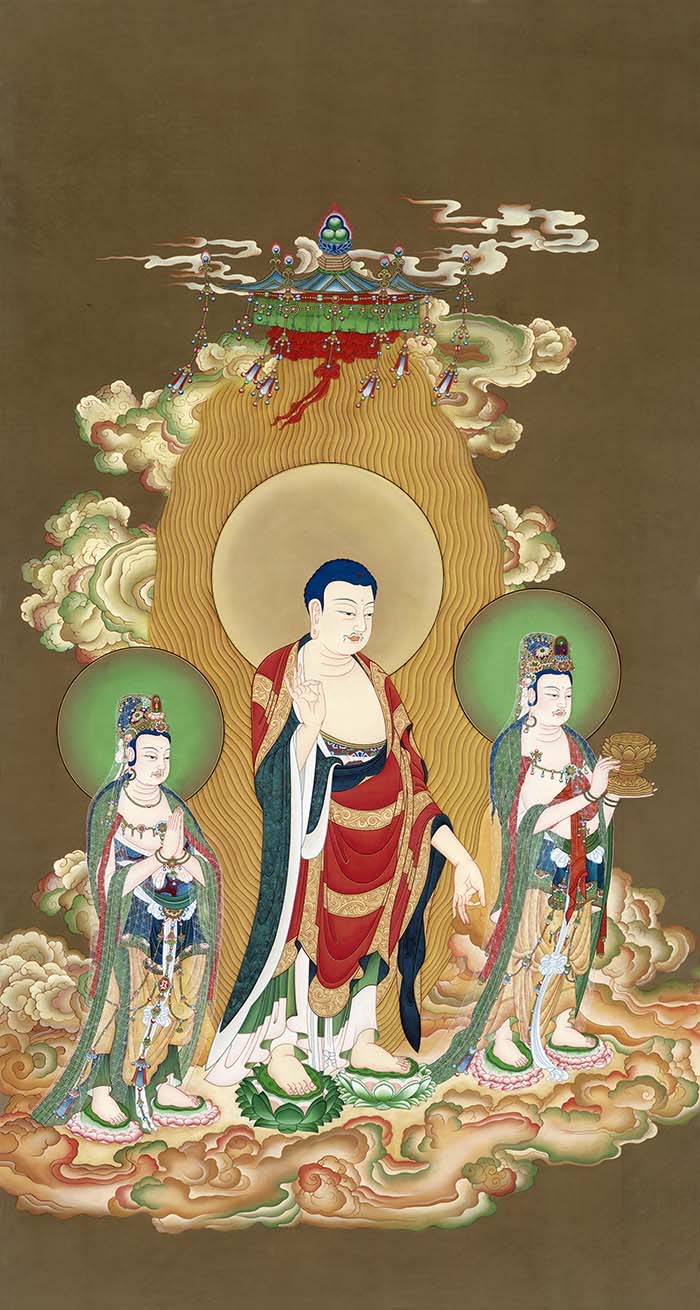
Learn to describe Buddhist art images with concise, accessible alt text that names visible details and handles uncertain iconography carefully.
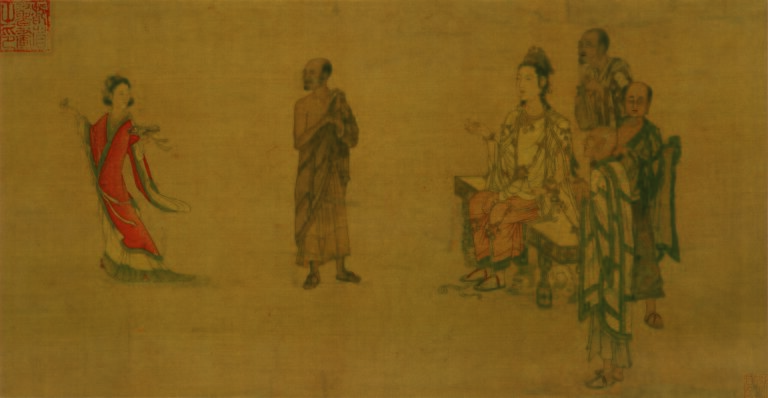
Learn to read flower offerings in Buddhist art through gesture, spacing, attendants, monastic dress, and careful attribution.
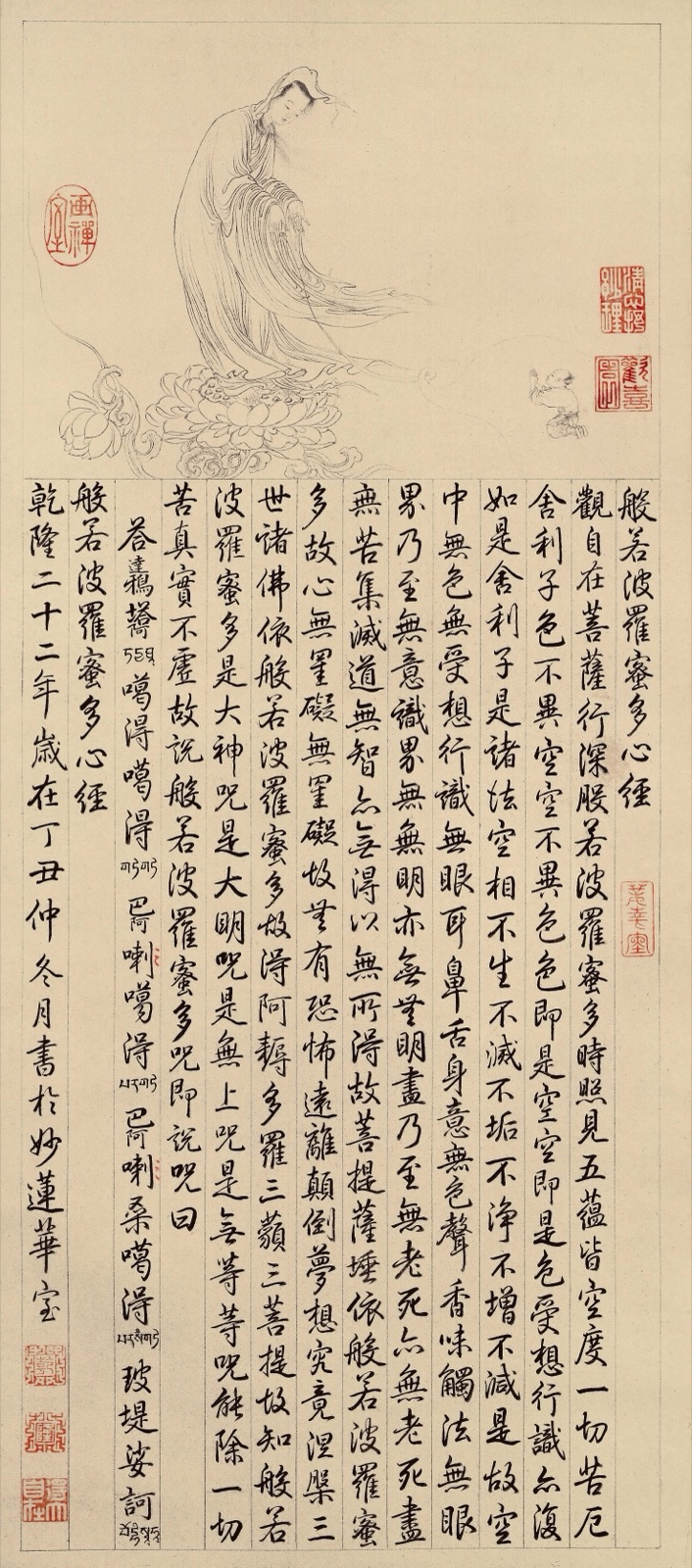
Learn to examine Heart Sutra calligraphy through its text columns, Bodhisattva image, seals, paper, and uncertain attribution.

A practical visual guide to the circular mountain kingdom, central court, repeated portraits, mounted armies, landscape divisions, and uncertain details in Shambhala painting TK1510.
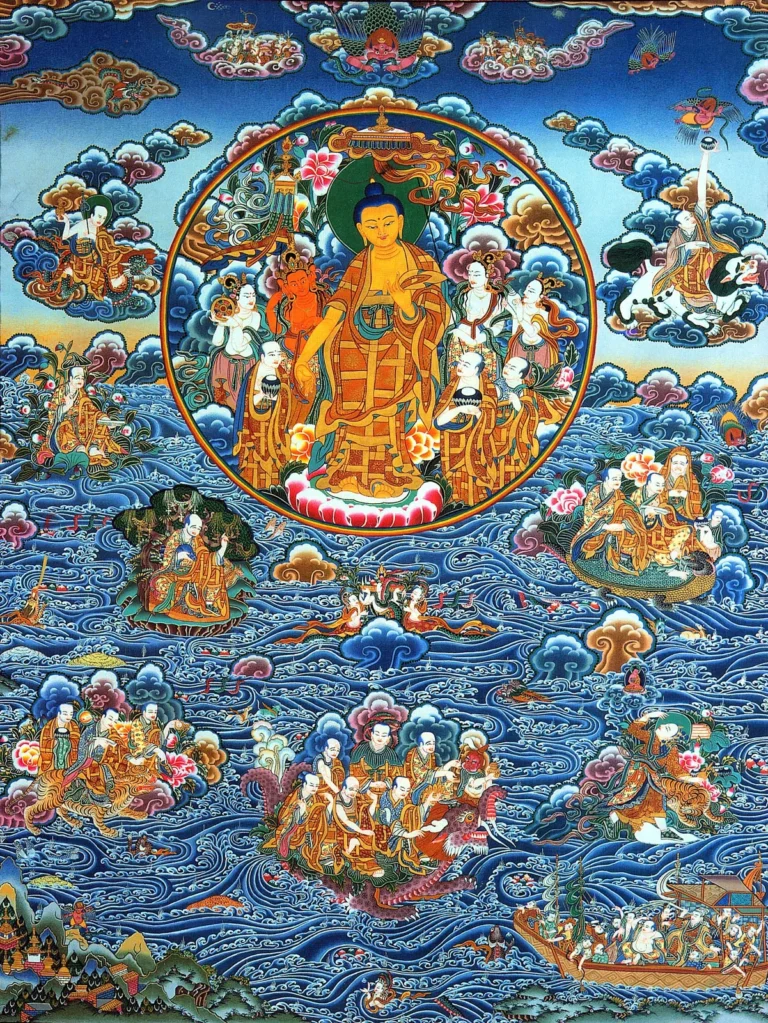
Learn how patterned waves, islands, boats, animals, clouds, and figure scale organize a Buddhist sea-crossing image, using Shakyamuni scene TK0583 as a visual study.
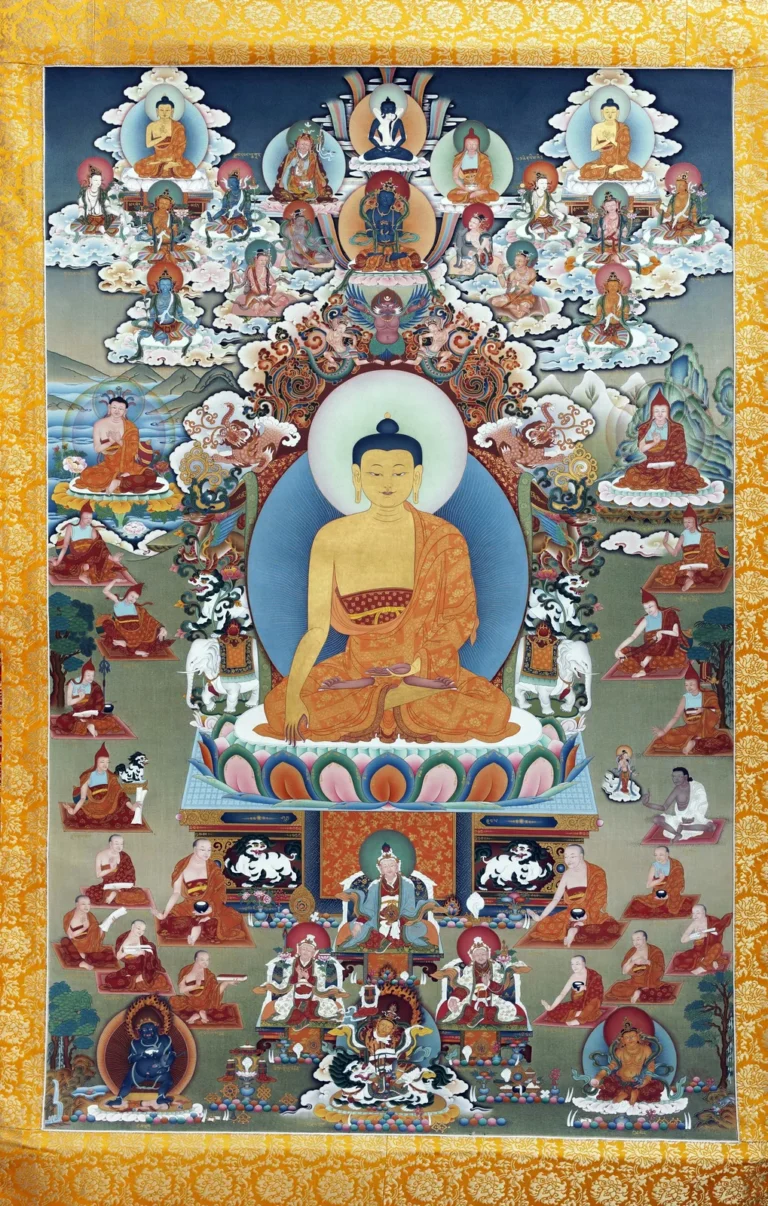
Learn how figure size, position, framing, and repetition organize sacred importance in Buddhist art, using Shakyamuni Buddha image TK0582 as a practical visual study.
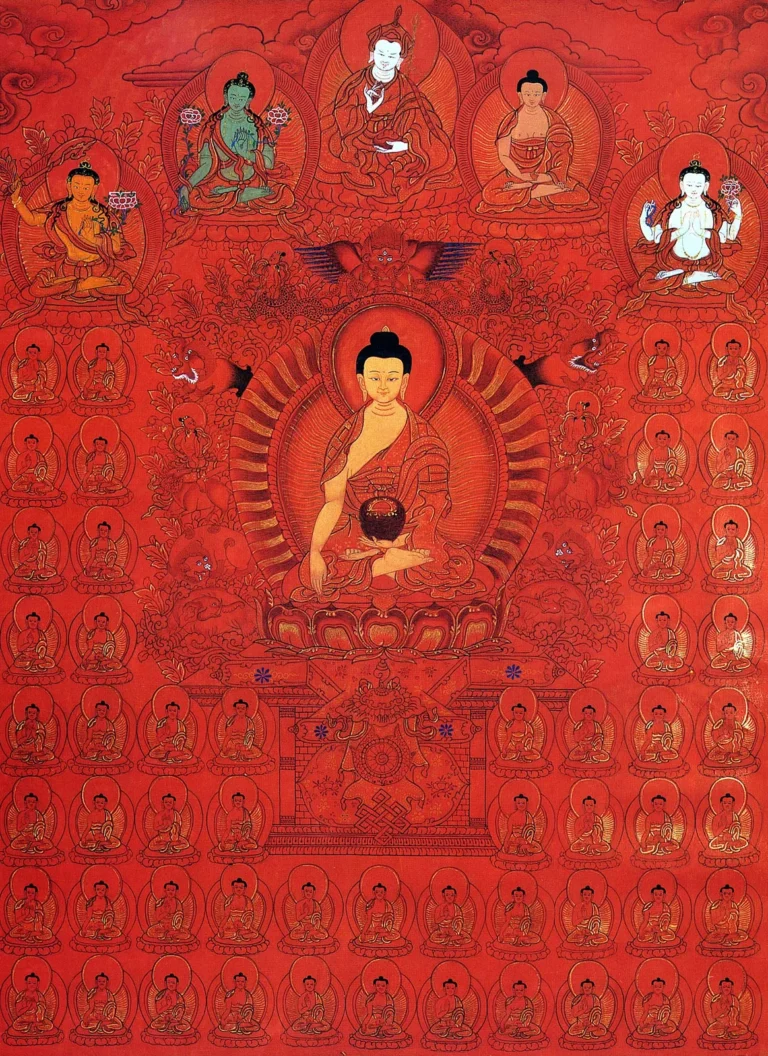
A practical guide to reading repeated Buddha figures through visual hierarchy, rows, scale, gesture, serial iconography, narrative sequence, and documented uncertainty.
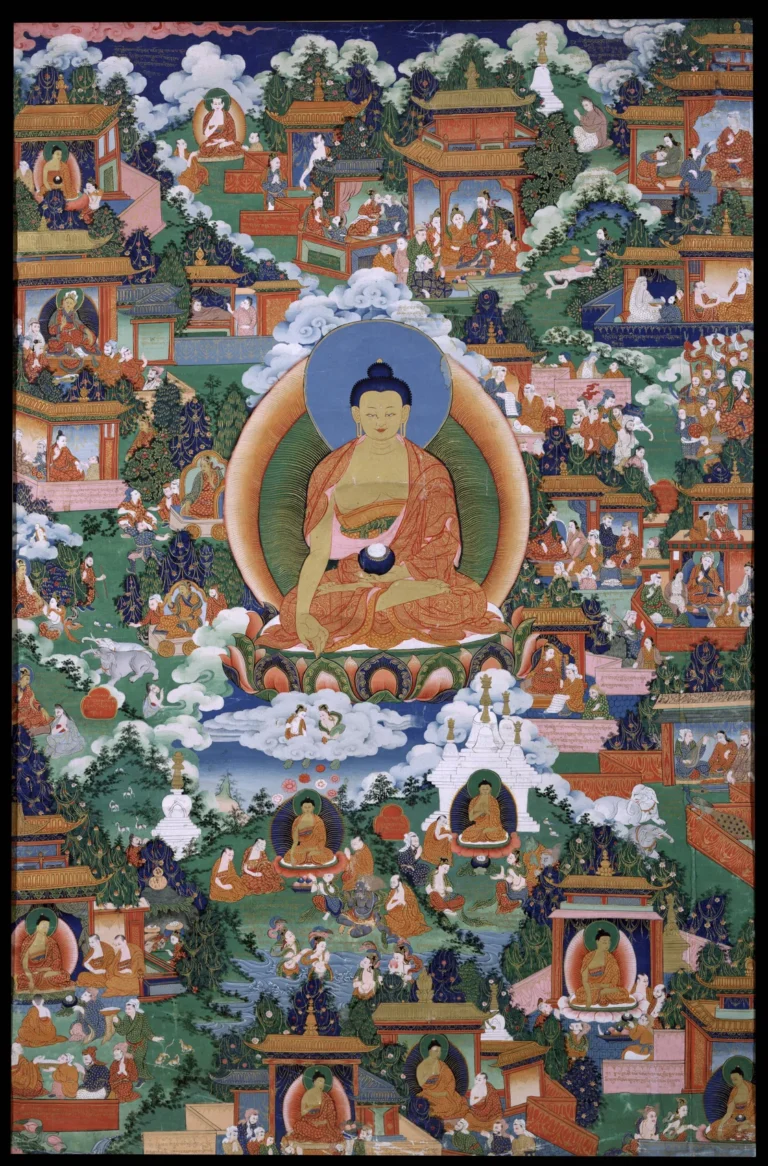
A practical guide to reading Buddhist narrative painting through the main icon, embedded scenes, visual hierarchy, architecture, inscriptions, and documented uncertainty.

Learn how to examine a Gu embroidery Arhat album through thread-like contour, directional shading, figure grouping, landscape details, and careful uncertainty.