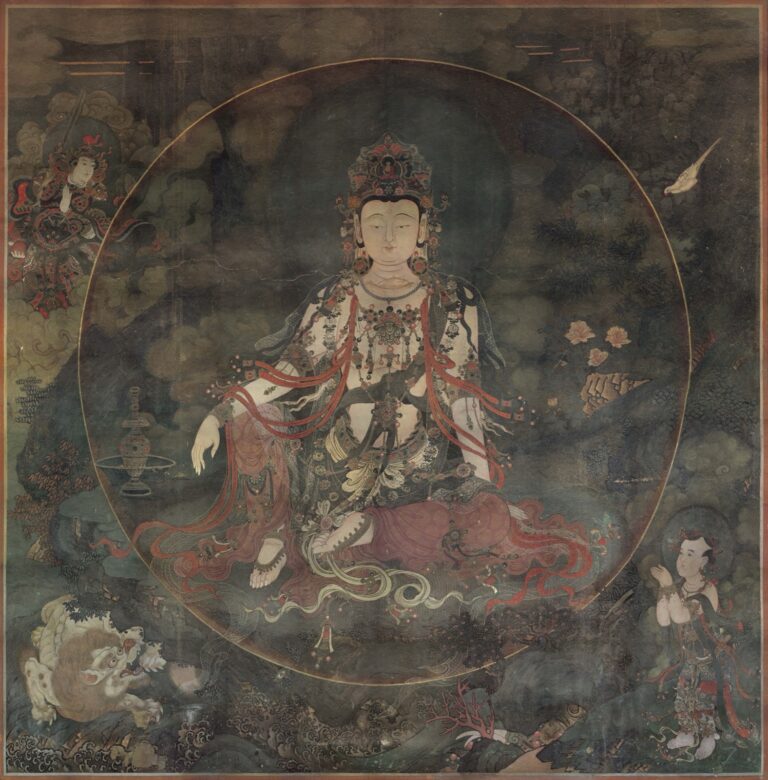
Water-Moon Avalokiteshvara at Fahai Temple: A Visual Guide
A close visual reading of Fahai Temple's Water-Moon Avalokiteshvara, including pose, moon halo, transparent veil, landscape, attendants, pigments, and preservation.

The Thangka World journal
Approachable guides to thangka paintings, Buddhist figures, mandalas and Himalayan visual culture. Study the guides, then explore the complete thangka image collection.
A close visual reading of Fahai Temple's Water-Moon Avalokiteshvara, including pose, moon halo, transparent veil, landscape, attendants, pigments, and preservation.
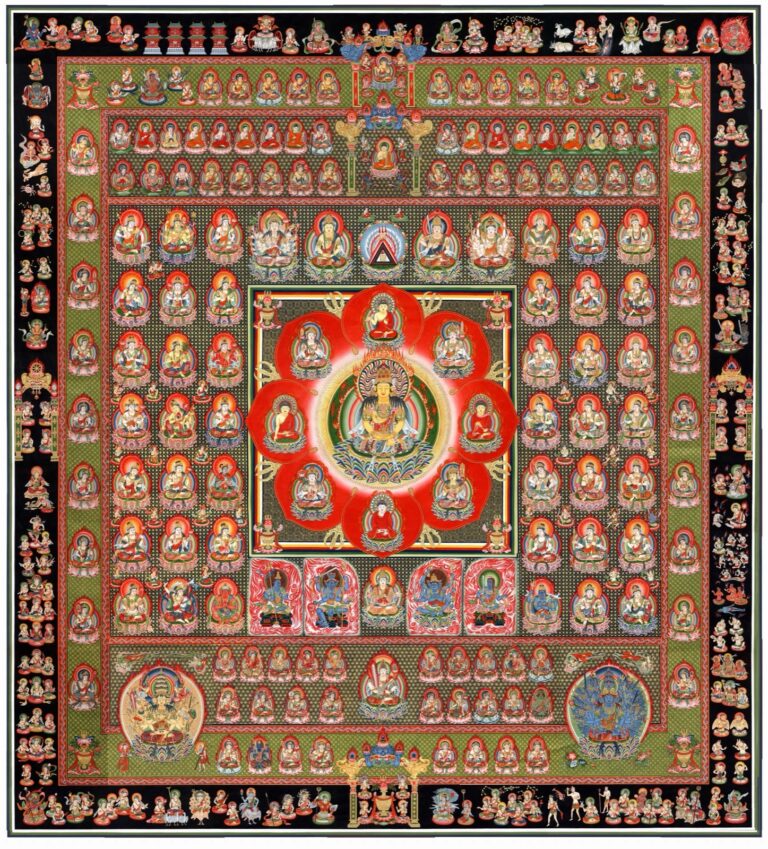
A structured guide to the Womb Realm Mandala, including its central lotus, Mahavairocana, surrounding courts, directional order, and relationship to the Diamond Realm.
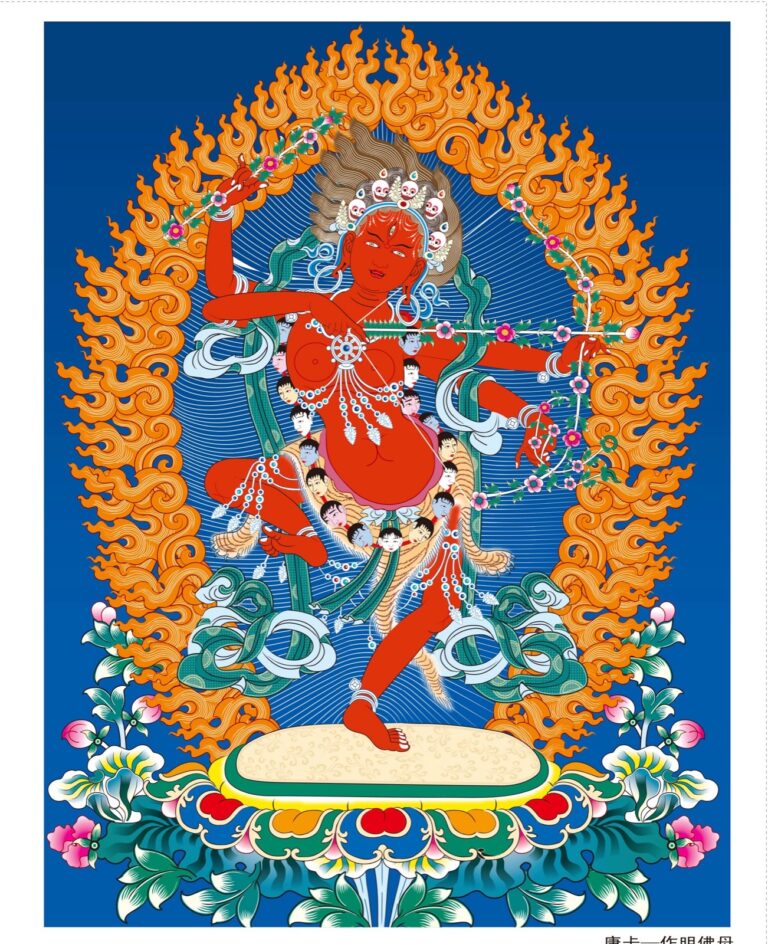
Learn to recognize Kurukulla through the red body, four arms, flower bow and arrow, hooked implements, dynamic posture, and careful comparison with related deities.
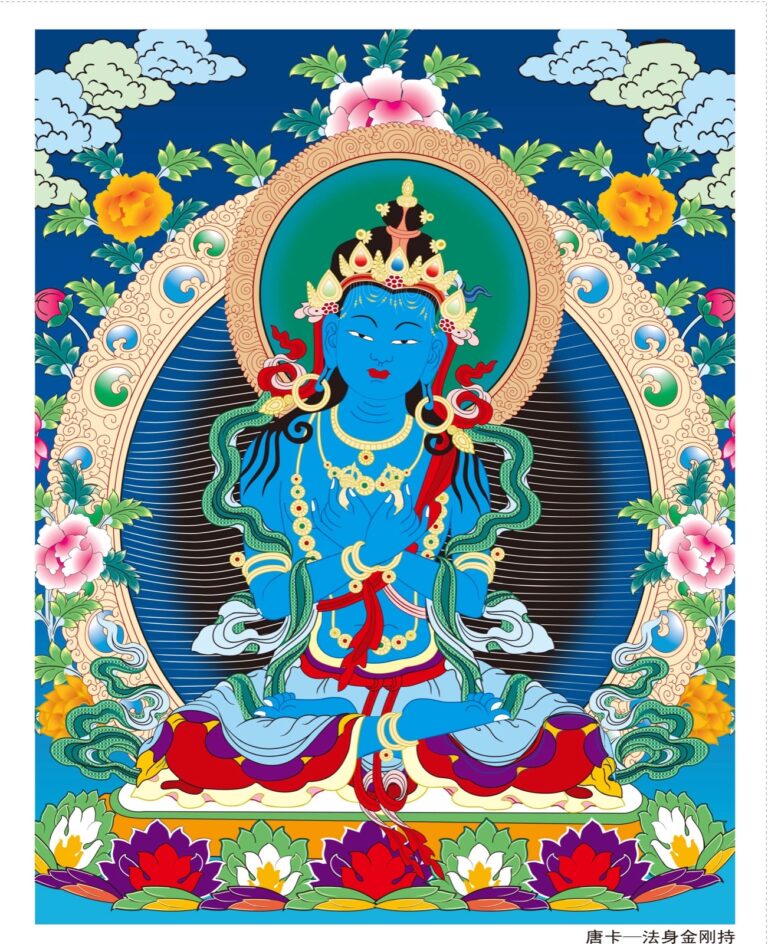
A practical guide to Vajradhara iconography, centered on the blue body, crossed vajra and bell, ornaments, meditation posture, and important look-alikes.
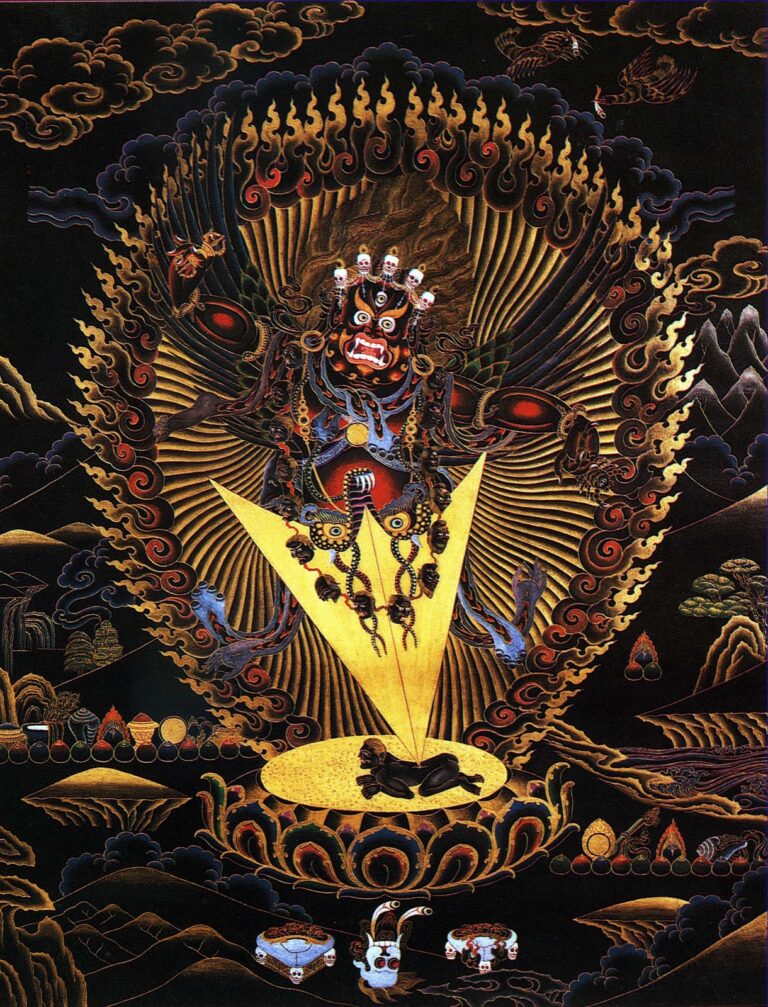
Identify Vajrakilaya through the downward-pointing ritual dagger, blue-black wrathful body, multiple faces and arms, wings, flames, and careful comparisons.
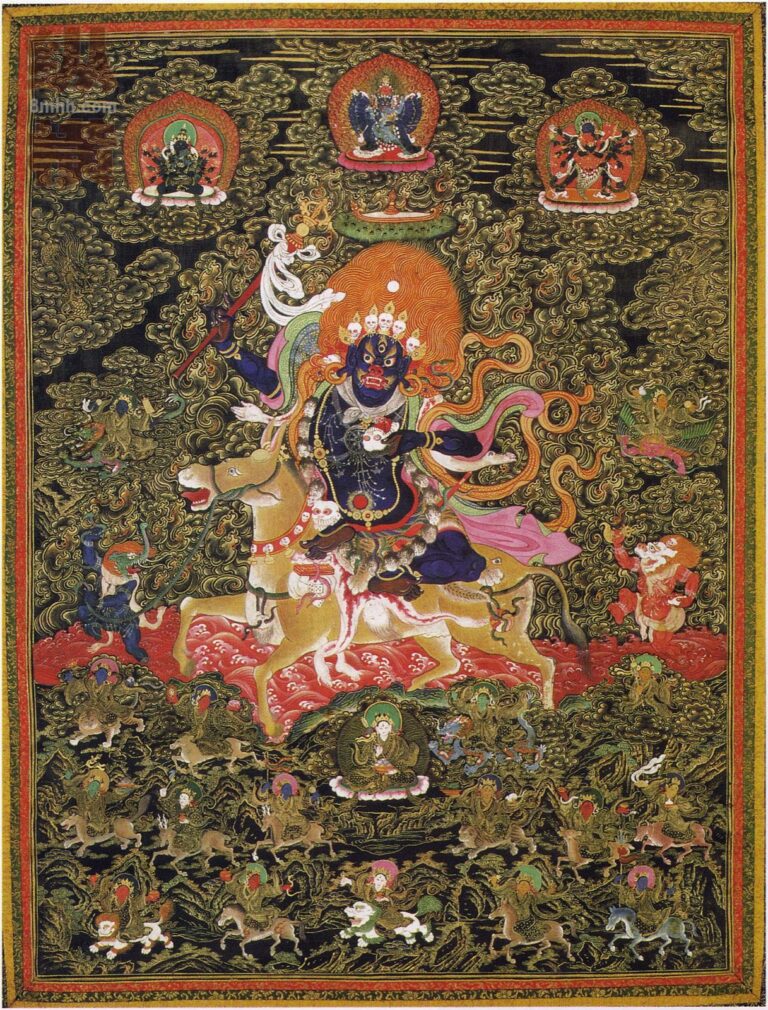
A visual guide to Palden Lhamo through her mule, wrathful expression, flames, skull imagery, ritual attributes, retinue, and role as a Buddhist protector.
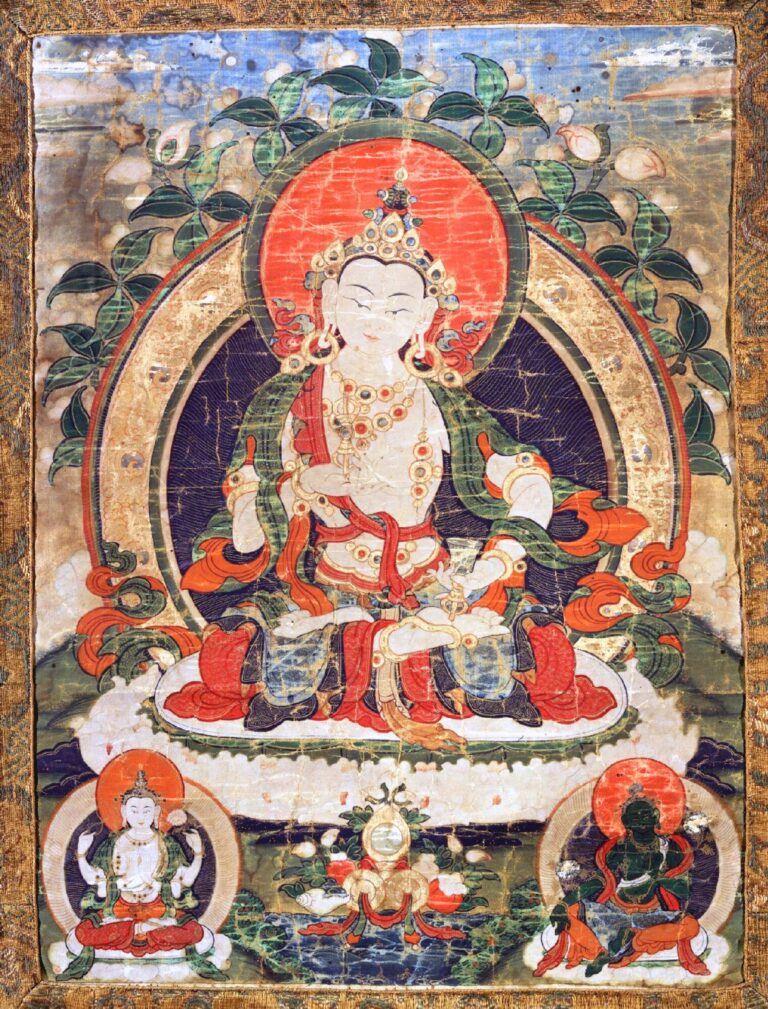
Identify Vajrasattva through the white body, jeweled crown, vajra held at the heart, bell at the hip, lotus seat, and careful comparison with similar forms.
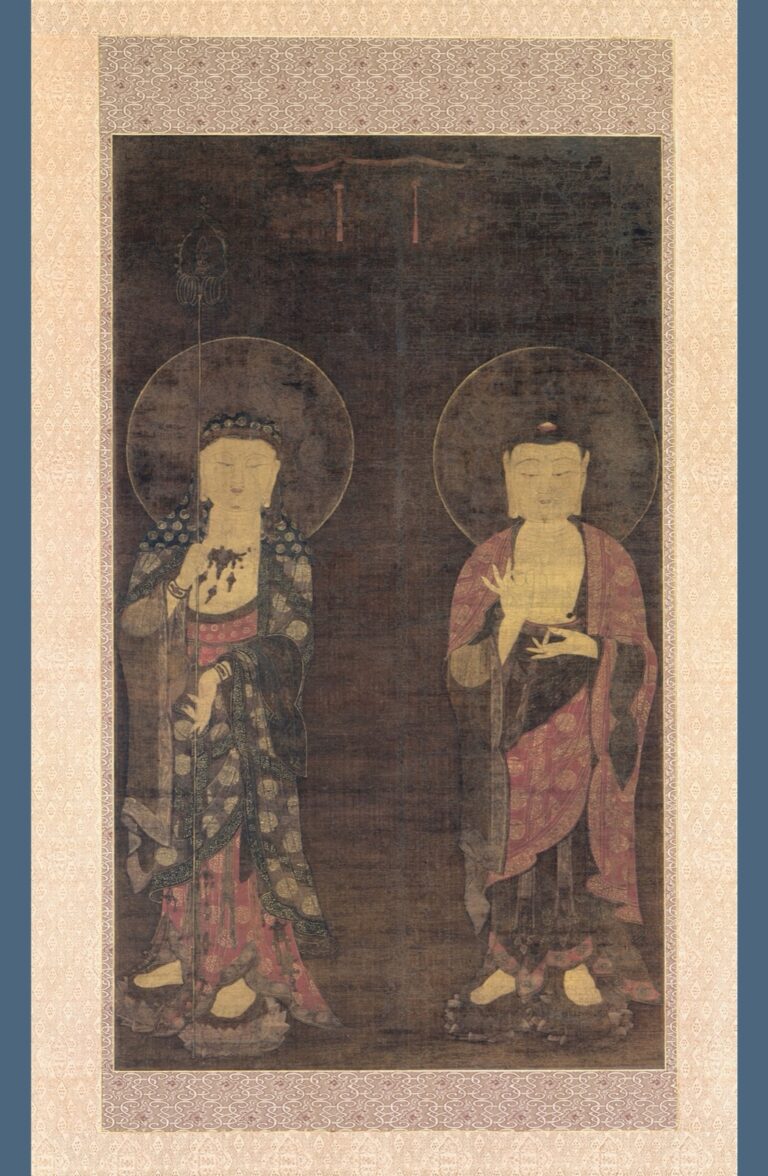
Recognize Kshitigarbha across Buddhist painting through the shaved head, monastic robes, ringed staff, wish-fulfilling jewel, lotus support, and regional variations.
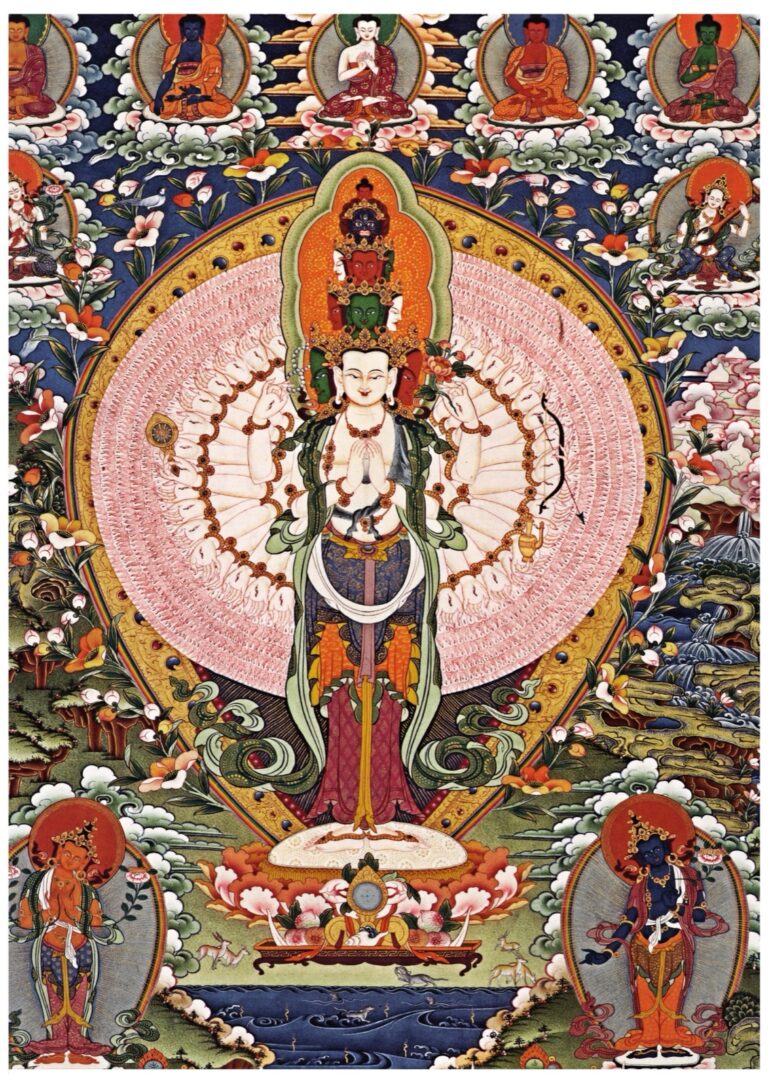
A careful visual guide to Thousand-Armed Avalokiteshvara, including the stacked heads, eye-marked hands, central gestures, ritual attributes, and common identification errors.
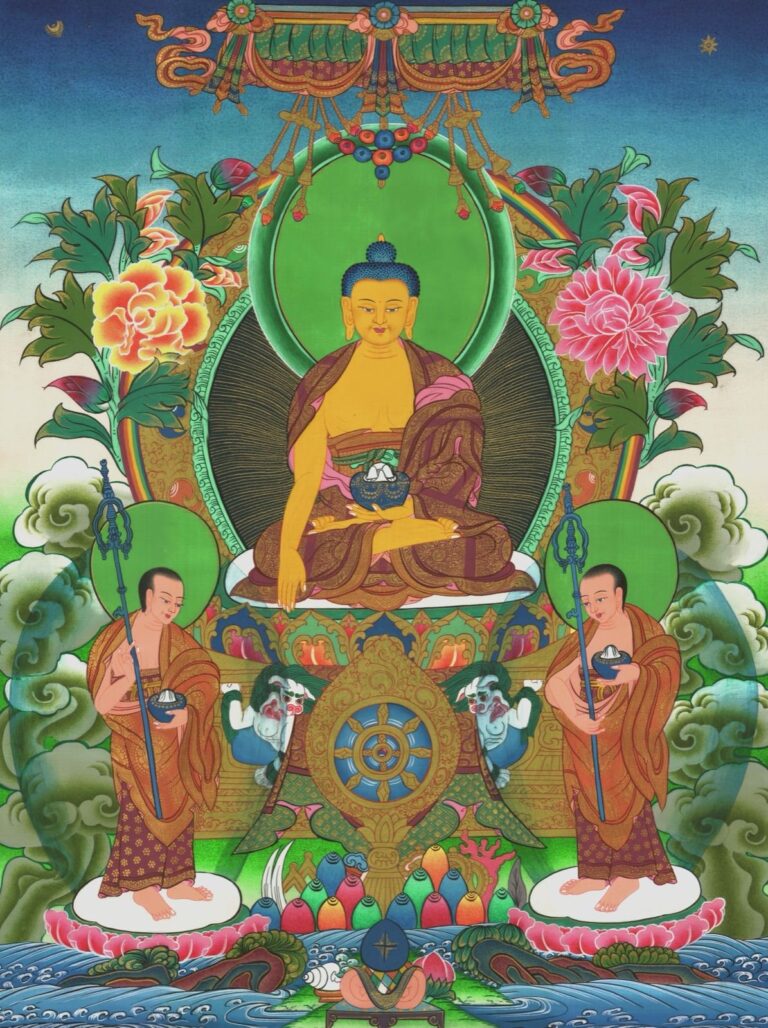
Identify Shakyamuni Buddha through the earth-touching gesture, alms bowl, monastic robes, bodily marks, disciples, throne, and narrative context.