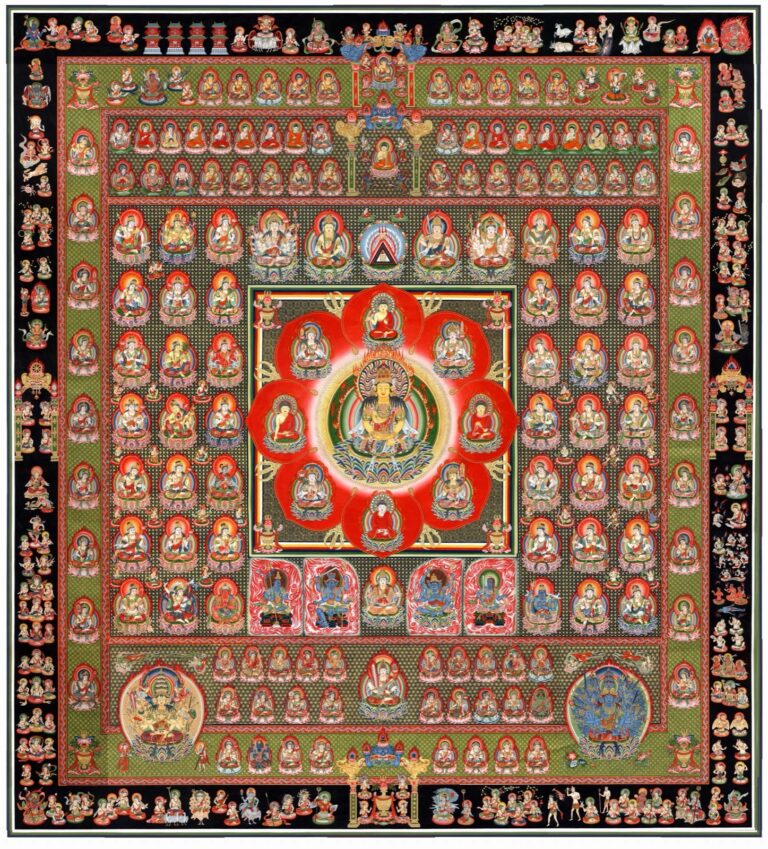
Womb Realm Mandala: How to Read Its Courts and Central Lotus
A structured guide to the Womb Realm Mandala, including its central lotus, Mahavairocana, surrounding courts, directional order, and relationship to the Diamond Realm.

Browse the journal
Explore guides to Buddhist deities, bodhisattvas, symbols and iconographic attributes found in traditional thangka paintings.
A structured guide to the Womb Realm Mandala, including its central lotus, Mahavairocana, surrounding courts, directional order, and relationship to the Diamond Realm.
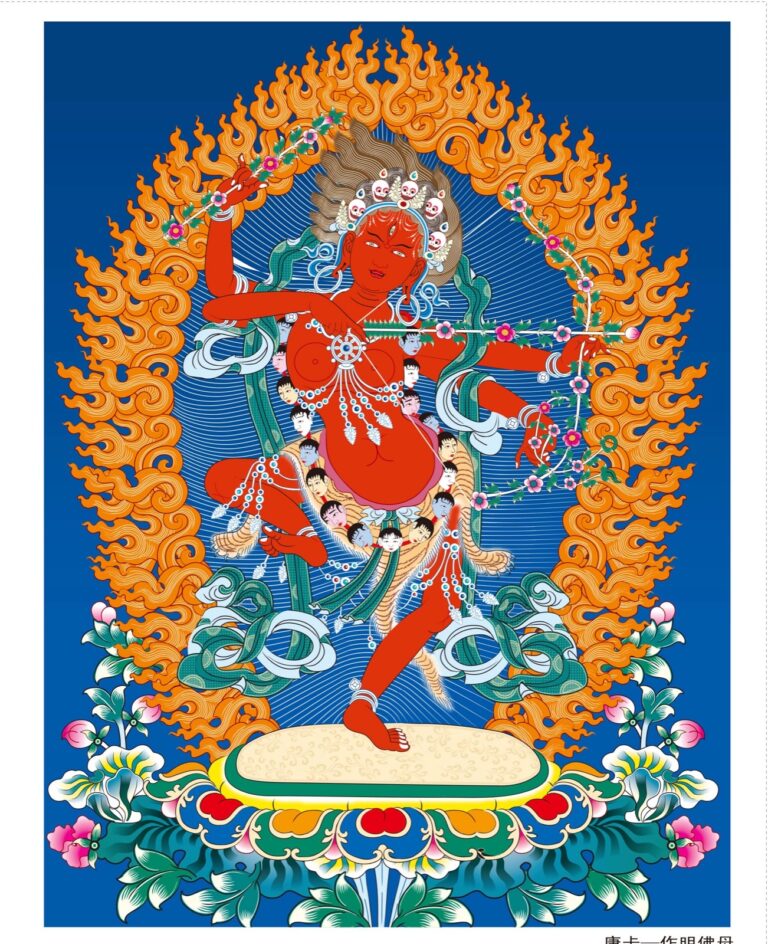
Learn to recognize Kurukulla through the red body, four arms, flower bow and arrow, hooked implements, dynamic posture, and careful comparison with related deities.
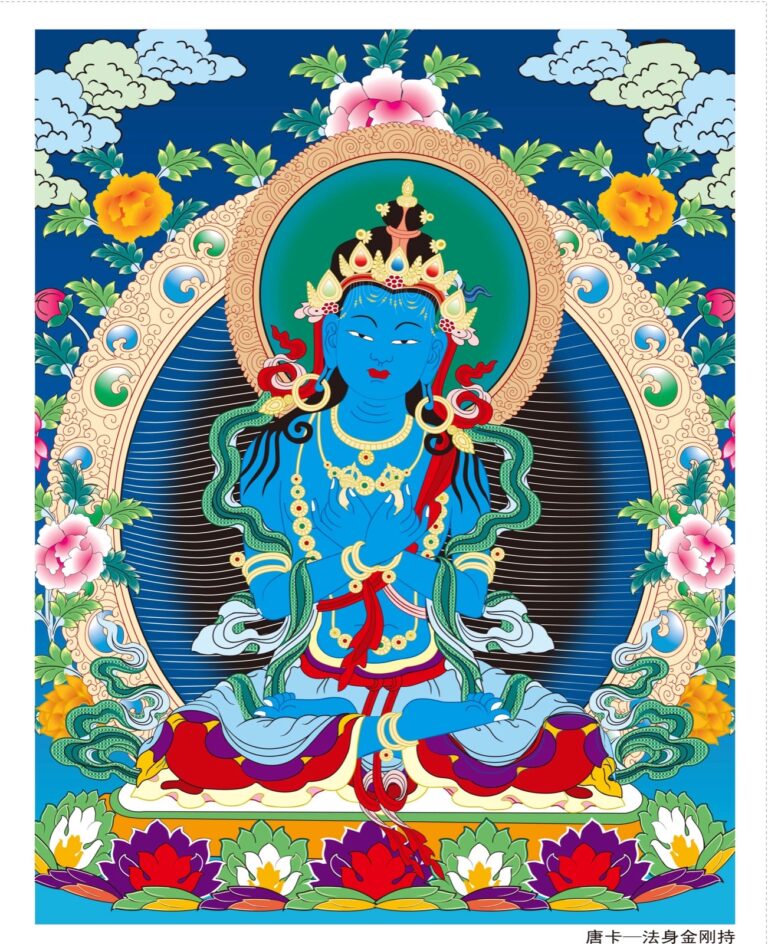
A practical guide to Vajradhara iconography, centered on the blue body, crossed vajra and bell, ornaments, meditation posture, and important look-alikes.
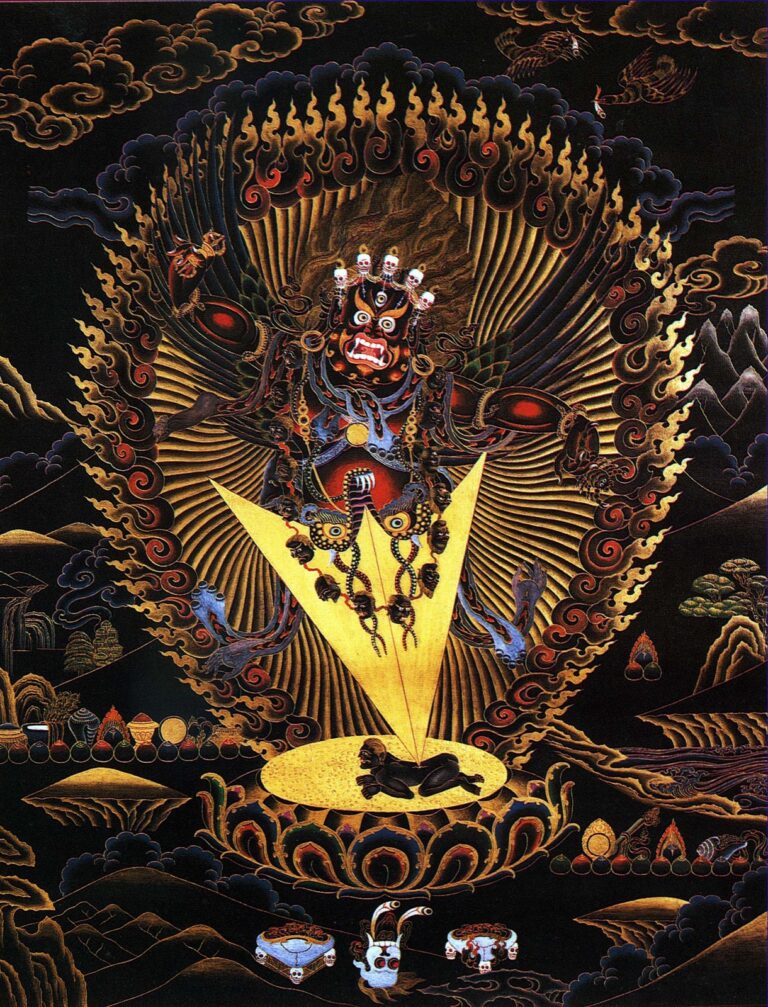
Identify Vajrakilaya through the downward-pointing ritual dagger, blue-black wrathful body, multiple faces and arms, wings, flames, and careful comparisons.
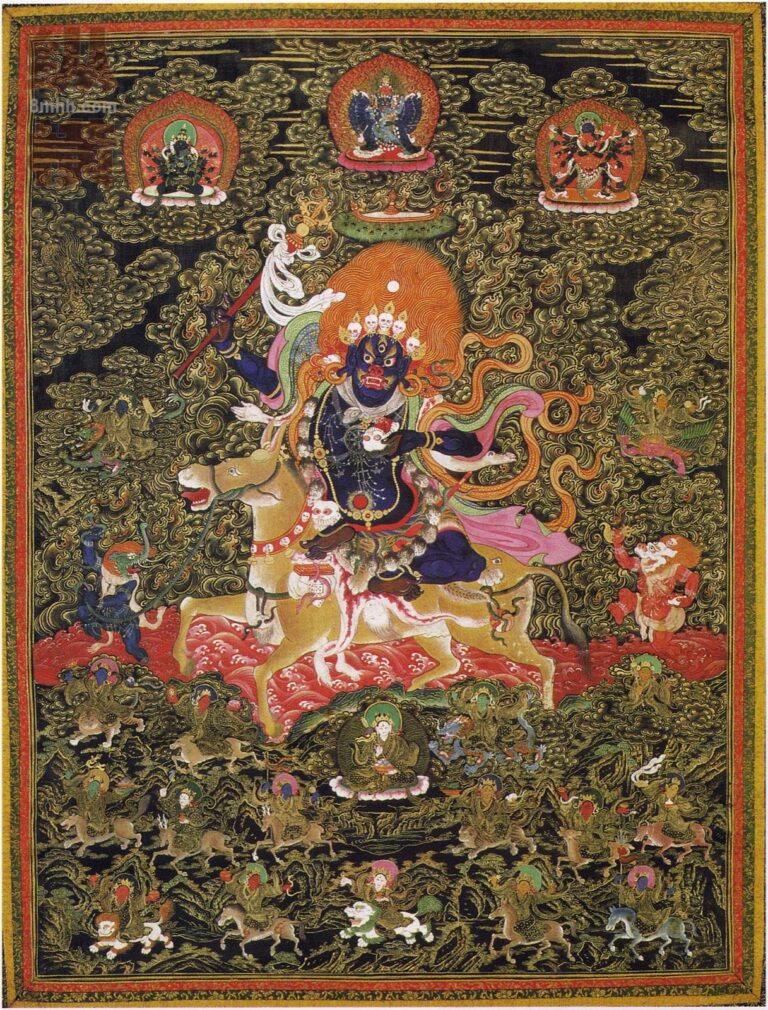
A visual guide to Palden Lhamo through her mule, wrathful expression, flames, skull imagery, ritual attributes, retinue, and role as a Buddhist protector.
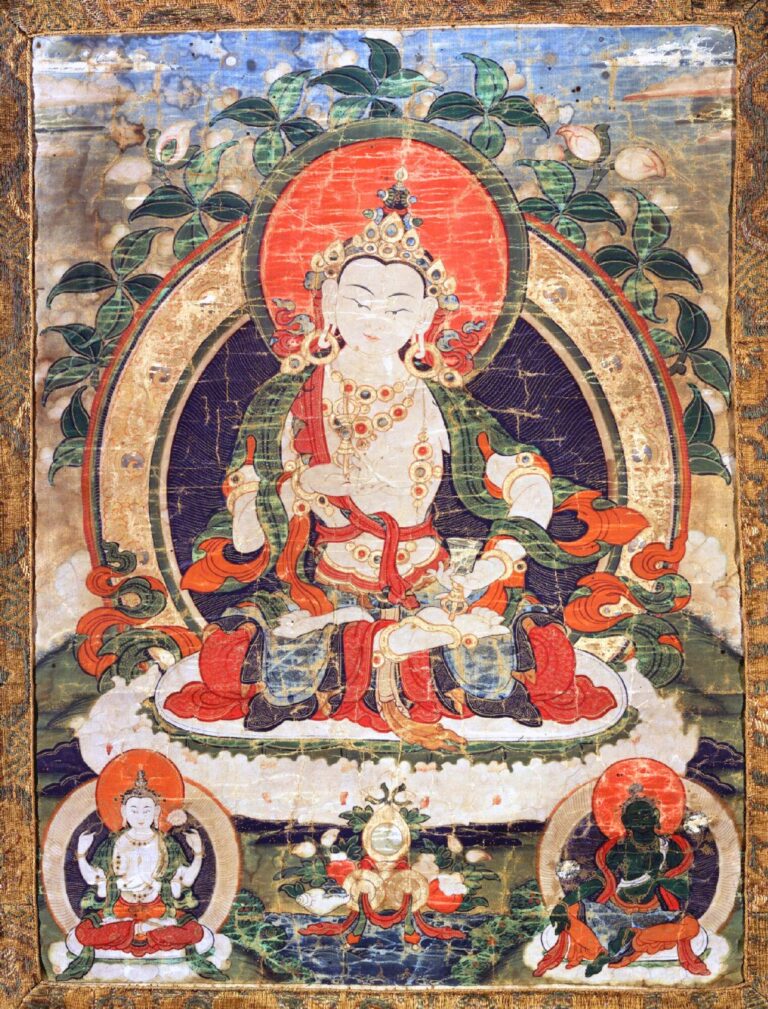
Identify Vajrasattva through the white body, jeweled crown, vajra held at the heart, bell at the hip, lotus seat, and careful comparison with similar forms.
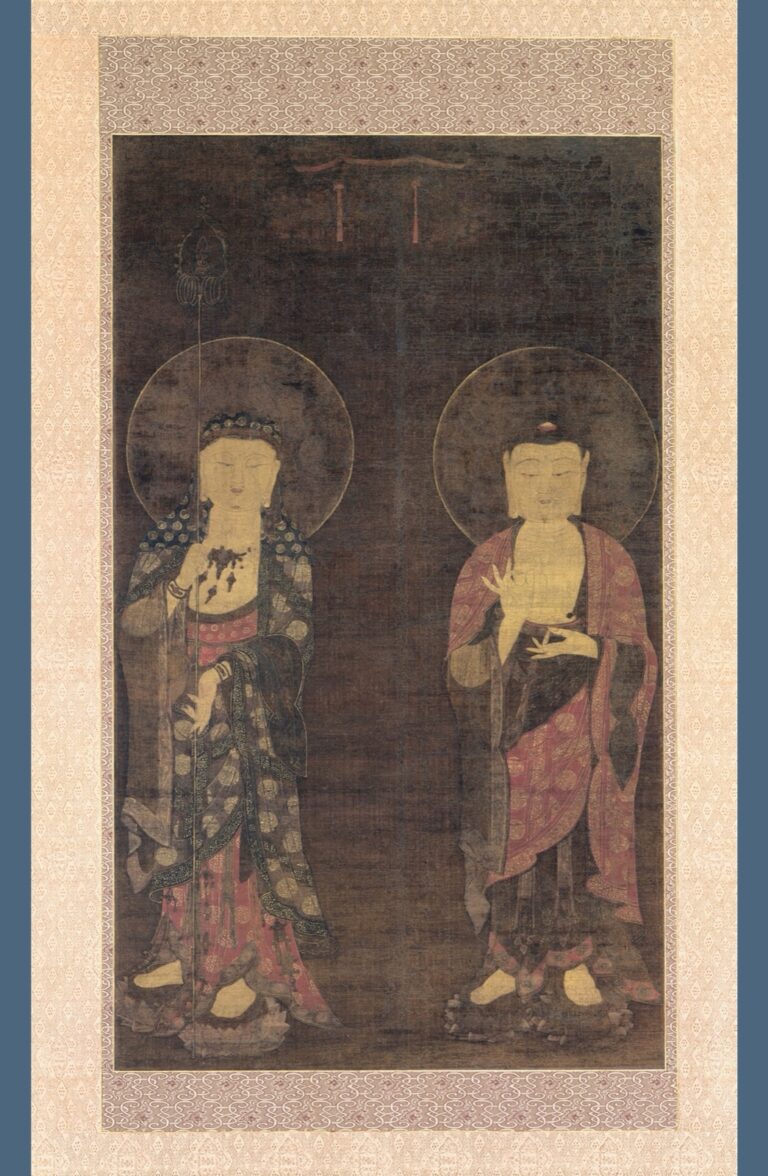
Recognize Kshitigarbha across Buddhist painting through the shaved head, monastic robes, ringed staff, wish-fulfilling jewel, lotus support, and regional variations.
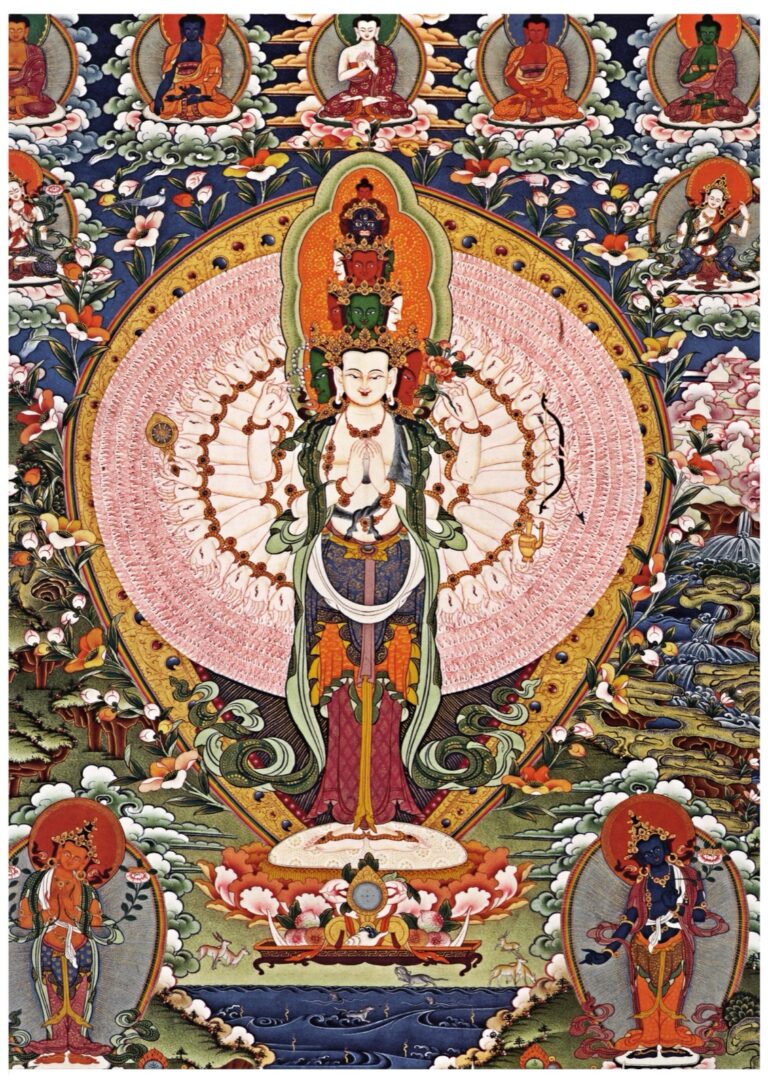
A careful visual guide to Thousand-Armed Avalokiteshvara, including the stacked heads, eye-marked hands, central gestures, ritual attributes, and common identification errors.
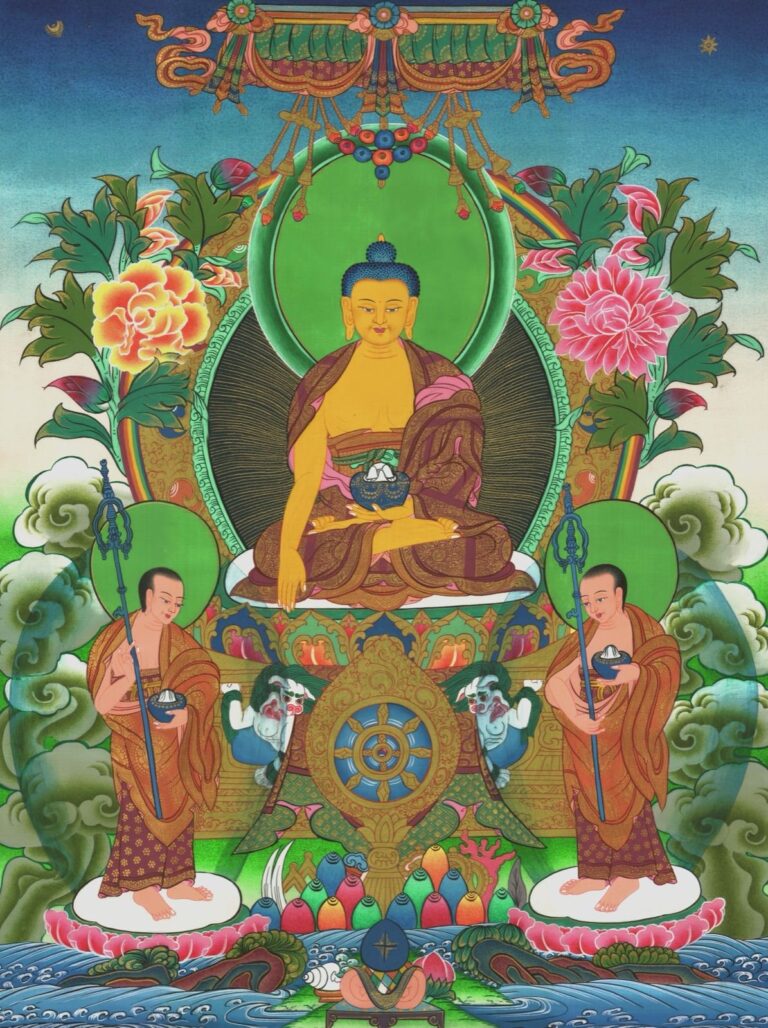
Identify Shakyamuni Buddha through the earth-touching gesture, alms bowl, monastic robes, bodily marks, disciples, throne, and narrative context.
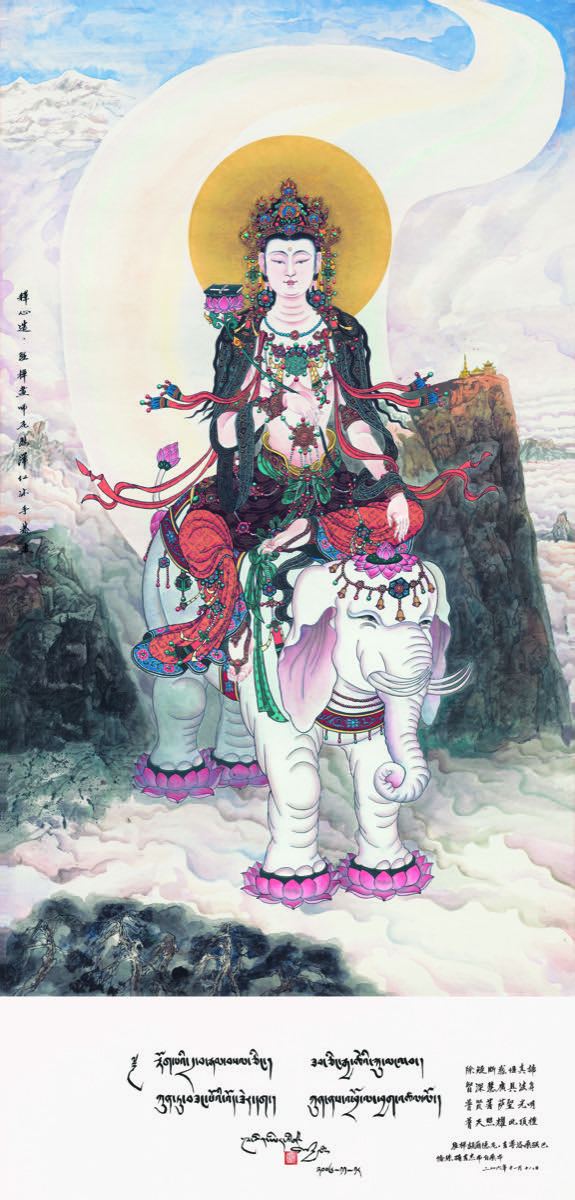
Identify Samantabhadra Bodhisattva through the white elephant and peaceful form, while distinguishing him from the primordial Buddha also called Samantabhadra.