
Ten Kings of Hell in Buddhist Art: How to Read Judgment Scenes
Learn how to read a Ten Kings of Hell judgment painting through its ruler, court records, officials, punishments, and visual hierarchy.

Browse the journal
Explore guides to Buddhist deities, bodhisattvas, symbols and iconographic attributes found in traditional thangka paintings.
Learn how to read a Ten Kings of Hell judgment painting through its ruler, court records, officials, punishments, and visual hierarchy.
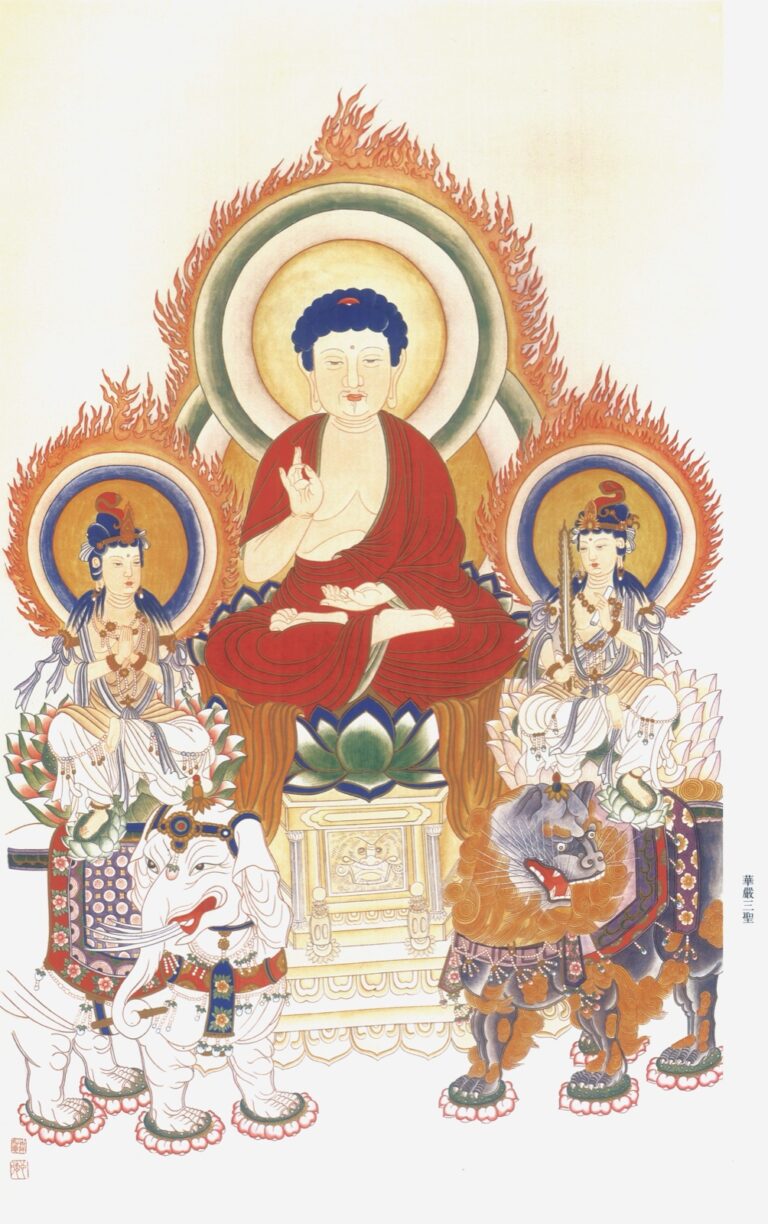
Identify the Huayan Trinity through Vairocana at the center, Manjushri’s lion, and Samantabhadra’s white elephant in Buddhist art.
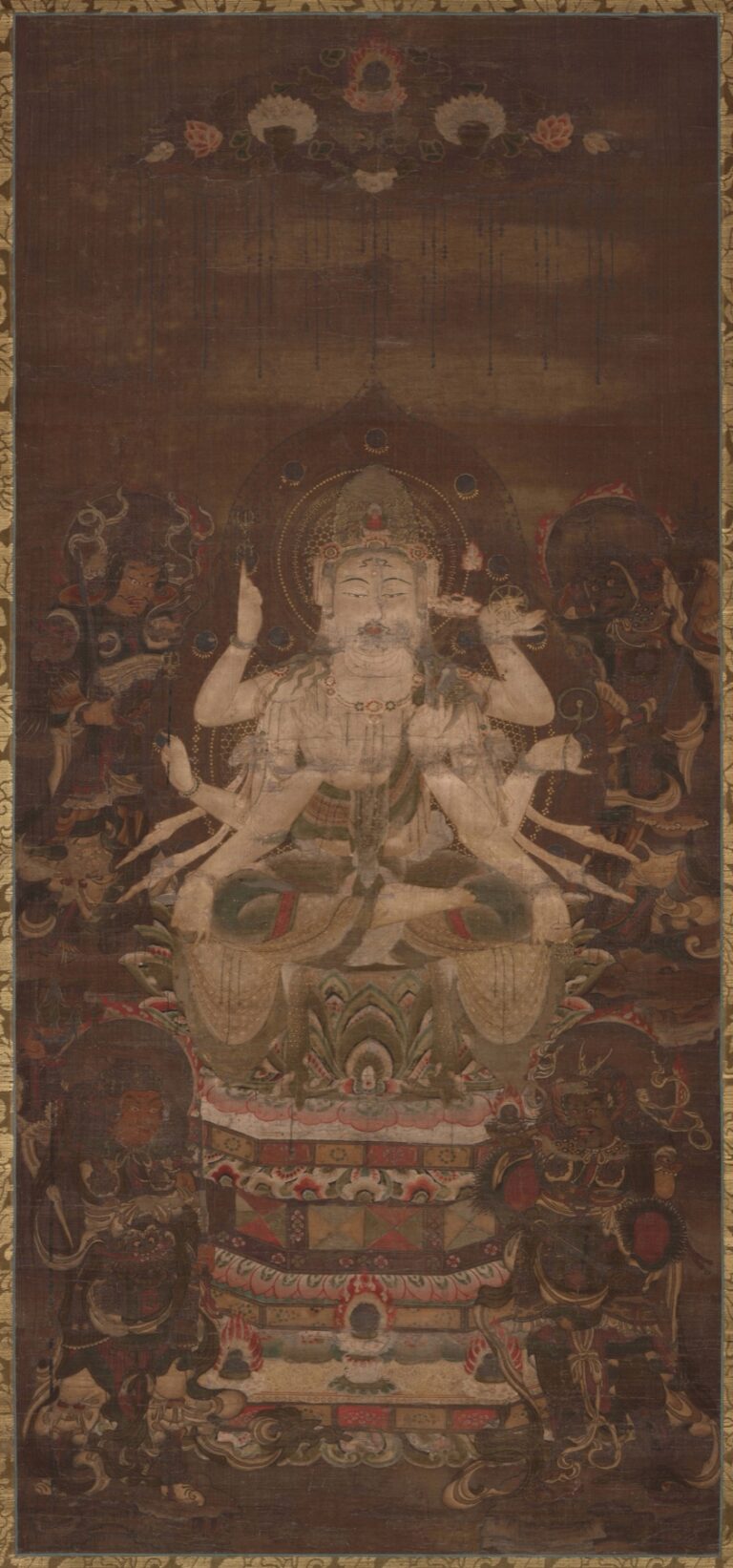
A visual guide to Cundi Avalokiteshvara, or Juntei Kannon, explaining the rare eight-armed Japanese form, Four Heavenly Kings, color, attributes, and safe identification steps.
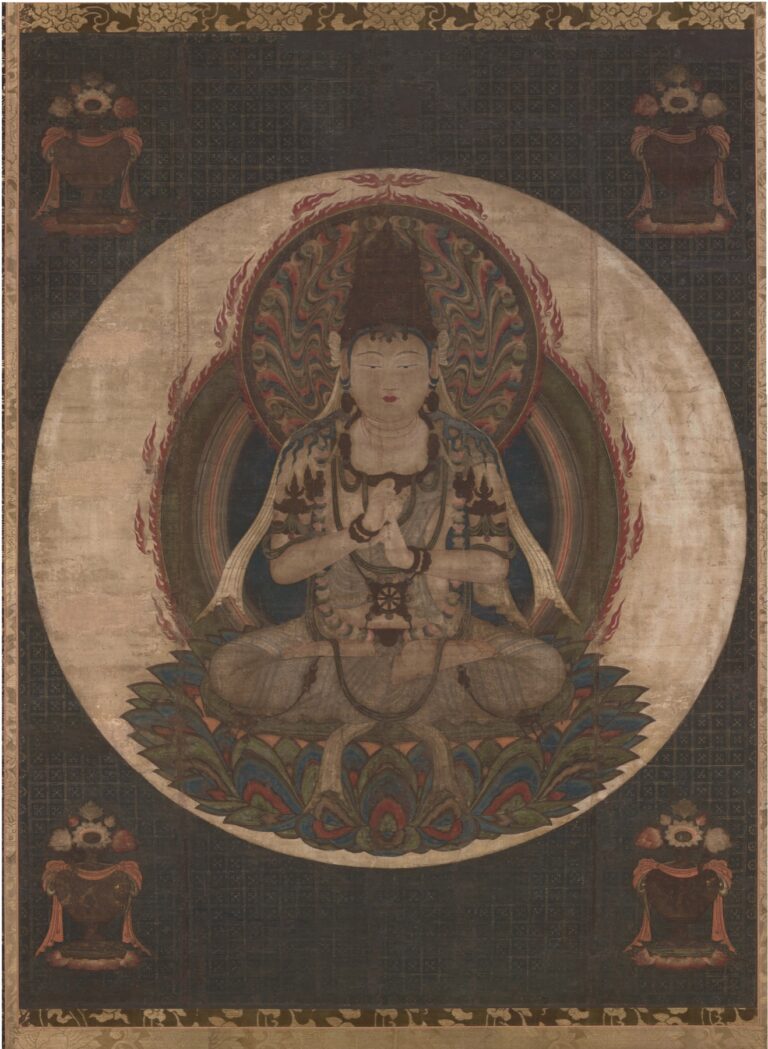
A practical visual guide to the One-Syllable Golden Wheel deity, or Ichiji Kinrin, using a 13th-century Japanese Buddhist painting to explain its mudra, mandorla, color, and identification clues.

Explore the Twelve Devas through directions, attributes, ritual roles, and Futen (Vayu), with an evidence-first checklist for reading guardian images.

Read Akashagarbha Buddhist art through Kokuzo’s jewel, moon disc, mudra, lotus seat, museum comparisons, and an evidence-first identification checklist.
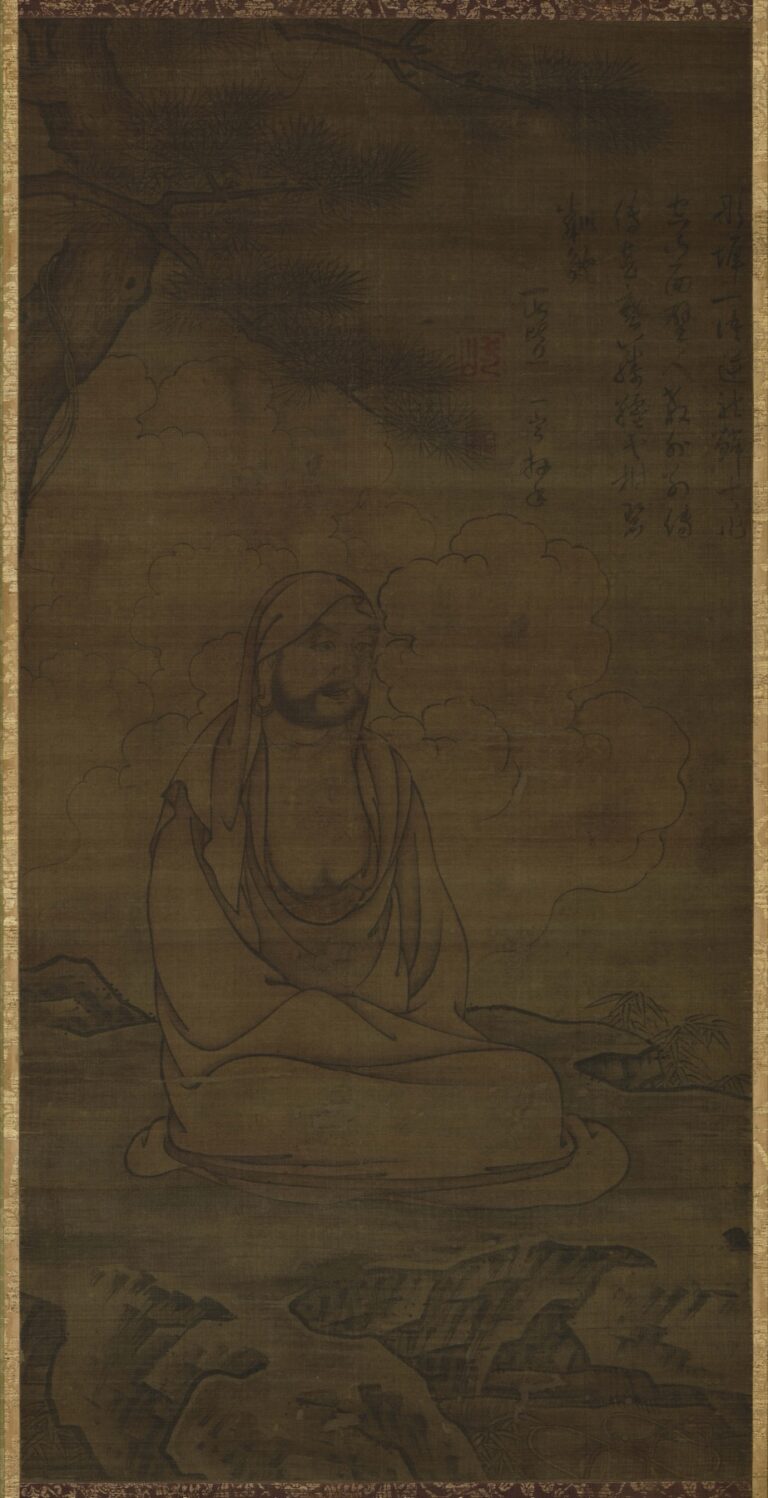
Read Bodhidharma painting iconography through the seated pose, robe, landscape, gaze, inscription, and an evidence-first identification checklist.
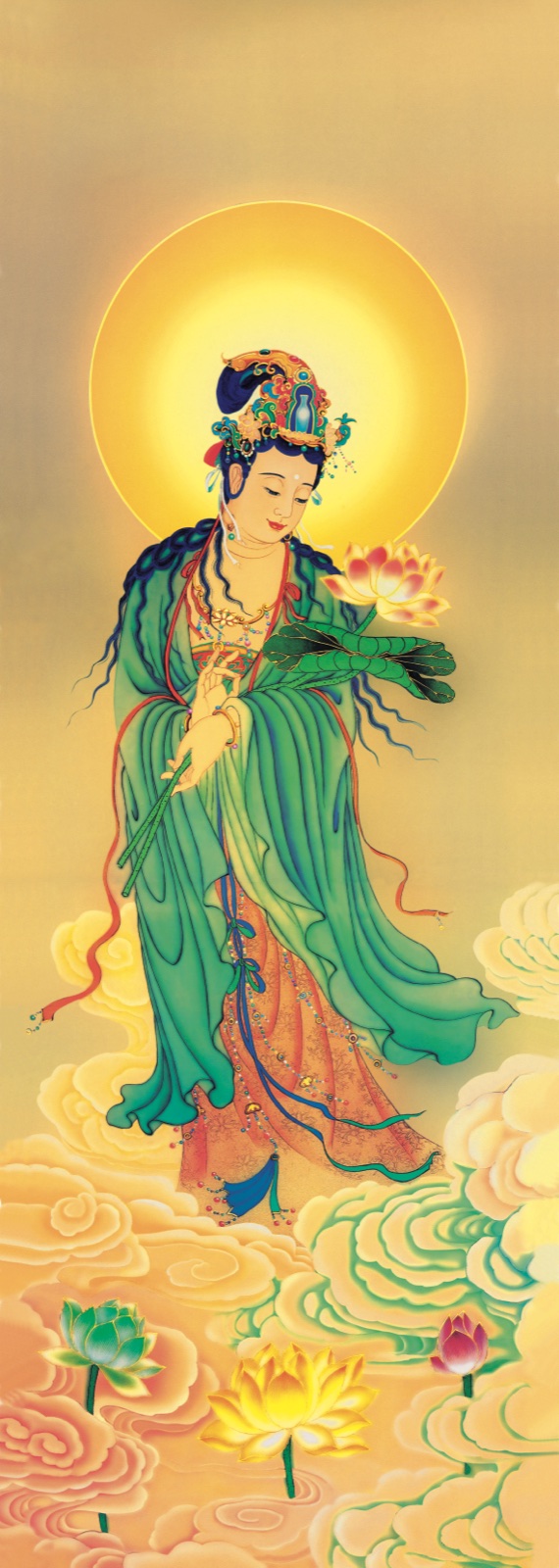
Identify Mahasthamaprapta through the crown’s vase emblem, Pure Land triad context, lotus imagery, and an evidence-first visual checklist.

Learn how Manjushri lion symbolism supports a careful reading of Buddhist murals through mounts, attributes, composition, and documented uncertainty.
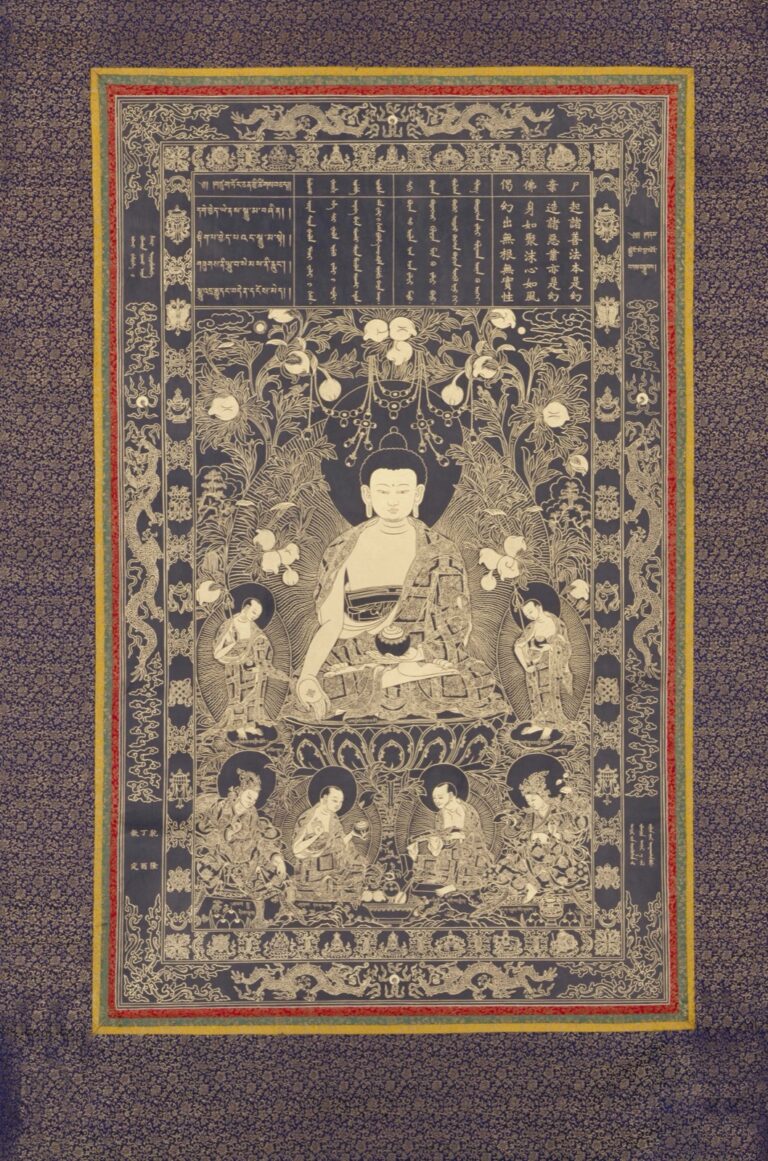
Read the Sikhin Buddha thangka through its central figure, multilingual inscription panels, gold-on-indigo design, attendants, and ornamental borders.