
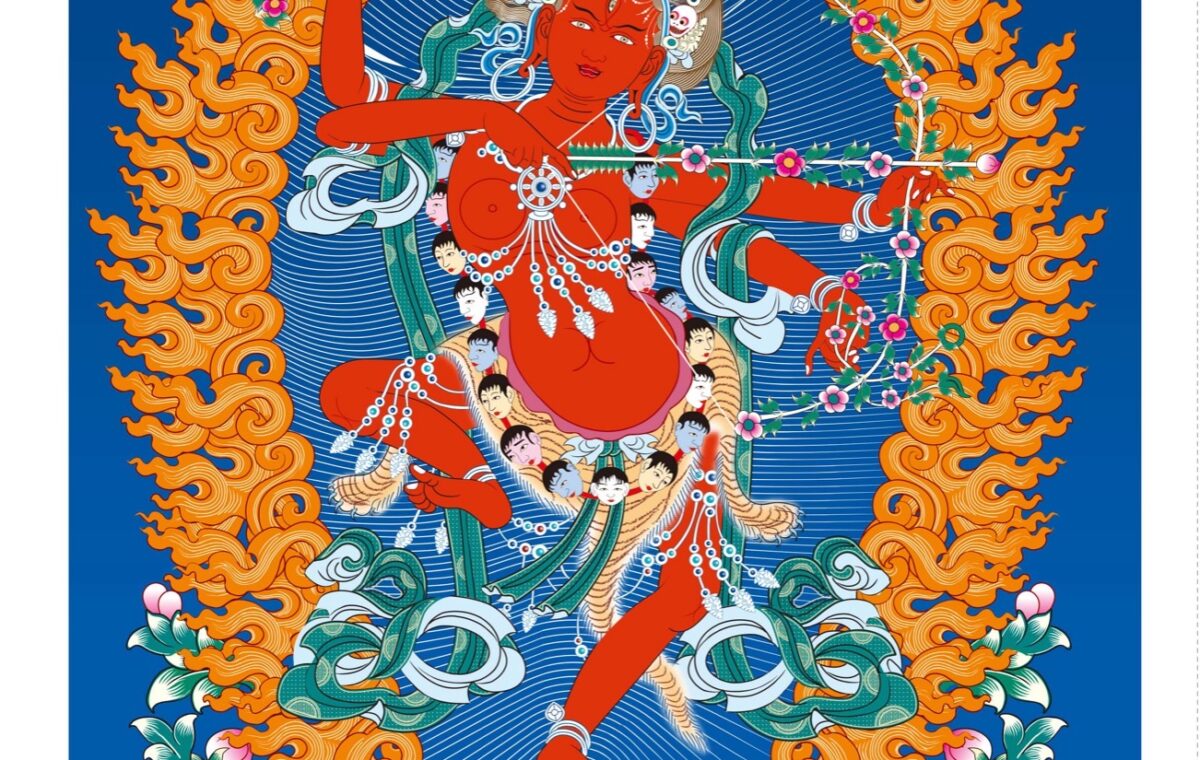
A Kurukulla thangka can be visually arresting: a red female deity dances inside flames while drawing a bow made from flowers. That memorable image encourages quick identification, but careful reading still matters. Several tantric goddesses are red, many stand in active postures, and details can change across lineages and artistic regions. Kurukulla is best recognized through a combination of body color, number of arms, flower weapons, hooked implements, expression, posture, and compositional context.
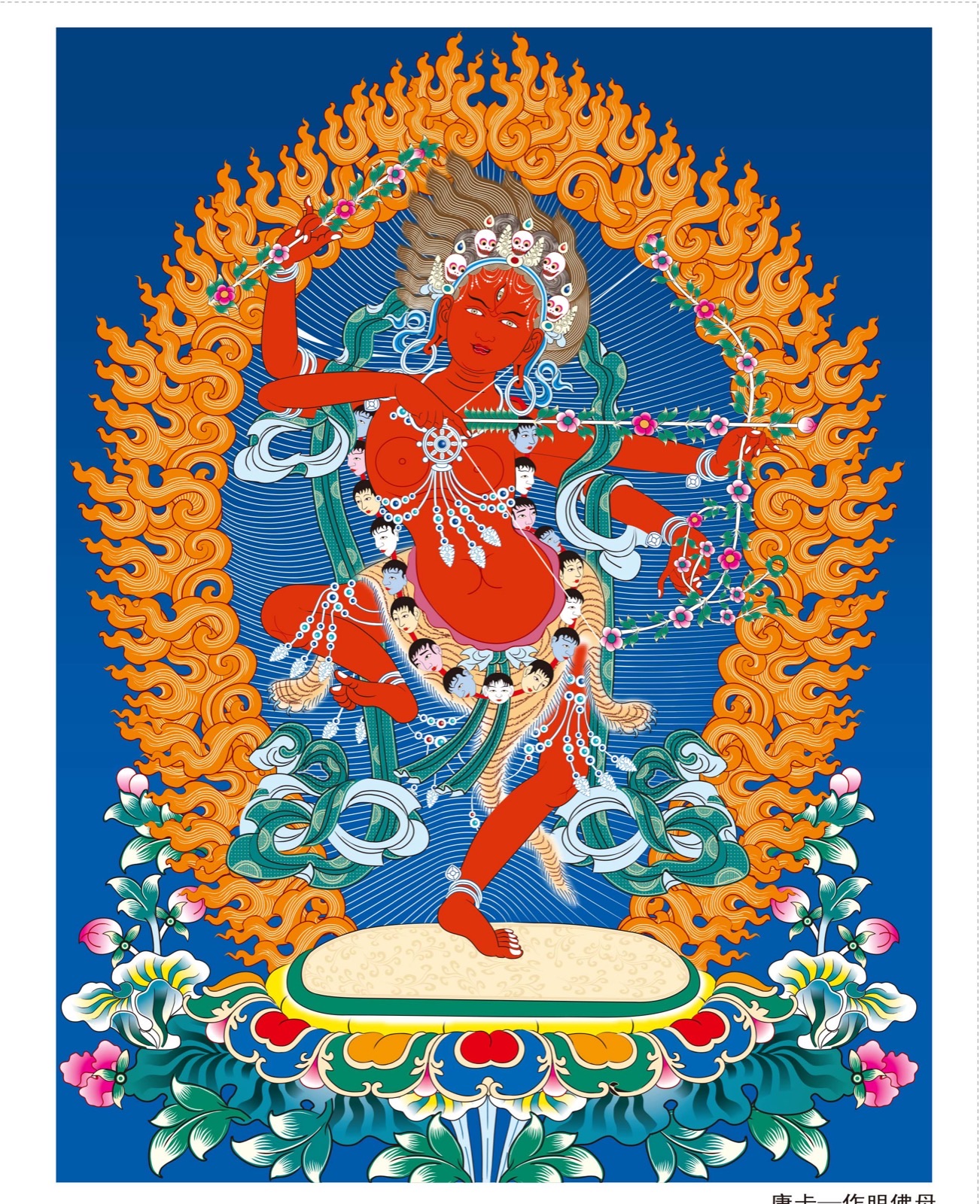
TK1246, illustrated here, is catalogued as Kurukulla. The image shows a red four-armed figure drawing a flower bow, surrounded by a bright flame aureole and standing in a dancing pose. It offers a clear study image, but its artist, date, workshop, lineage, material history, and provenance are uncertain in the local file record. The identification can be discussed from the visible attributes without inventing those missing facts.
Kurukulla thangka identification at a glance
Look for several of the following features together:
- A red female deity with one face and commonly four arms.
- A bow and arrow formed from flowers, often described as utpala blossoms.
- A flower hook and a flower noose, or implements shaped to pull and bind.
- A dynamic dancing posture with one leg bent and the other extended.
- A crown or ornaments associated with tantric deity imagery.
- A fierce or intensely focused expression rather than a placid smile.
- A flame aureole that frames active enlightened energy.
- A sun disc, lotus, subdued figure, or symbolic support beneath the feet, depending on the tradition.
The flower bow and arrow are usually the fastest clue. Still, viewers should count the arms, trace each object, and compare the figure with Vajrayogini, Green Tara, and other red female forms before finalizing a label.
Who is Kurukulla?
Kurukulla is a female tantric deity associated with magnetizing activity. In Buddhist ritual language, magnetizing does not simply mean ordinary romance or personal domination. It refers more broadly to drawing favorable conditions, beings, attention, or resources toward beneficial and awakened purposes. The imagery of attraction is therefore placed within an ethical and ritual framework, not treated as a promise of control over other people.
Her red color corresponds to the visual language of magnetizing activity in many Tibetan Buddhist contexts. Red can also signal heat, vitality, transformation, and power. Because symbolic color systems vary, the body color should support an identification rather than determine it by itself. The bow, arrow, hook, noose, and four-arm arrangement make the reading much stronger.
How to read Kurukulla’s four arms
The flower bow and arrow
The principal pair of hands commonly draws a bow and arrow made from flowers. Unlike a military weapon, this floral set expresses attraction through beauty, focused intention, and awakened activity. In a well-preserved thangka, individual blossoms may form the bow’s curve and the arrow’s shaft. In a small reproduction, the objects can look like garlands, so follow their overall geometry: one arm extends the bow while the opposite arm pulls the string toward the chest.
The hook
A hooked implement appears in another hand. Its basic visual action is to catch and draw inward. The hook may be constructed from flowers or ornamented so densely that its silhouette is hard to isolate. Look near the upper hands and distinguish the hook from the curved knife carried by other tantric goddesses.
The noose
The noose suggests binding or holding. In paintings it may appear as a loop, cord, garland, or flower chain. Compression, damage, and busy flame patterns can hide its path. Rather than naming an object from one unclear fragment, trace where the cord begins and ends and compare both upper hands.
Posture, expression, and the flame aureole
Kurukulla is often shown in a dancing stance. The asymmetry communicates active energy, unlike the stable cross-legged posture of many peaceful Buddhas and bodhisattvas. One leg may be raised while the other presses upon a symbolic figure or support. The meaning of a subdued figure depends on the specific text and tradition; it should not be identified by name without reliable documentation.
Her expression can combine beauty with intensity. Three eyes may signal expanded awareness, while bared teeth, uplifted hair, or a skull ornament can add a semi-wrathful character. A flame aureole does not mean that the figure is evil. In tantric Buddhist art, flames often represent transforming wisdom and the force that consumes obstacles or confusion.
TK1246 uses a crisp, strongly outlined style. The visible attributes support the Kurukulla identification, but the polished surface does not tell us whether the image is an old painting, a modern reproduction, or a contemporary rendering. That distinction remains uncertain without object-level documentation.
Kurukulla compared with similar red female deities
Kurukulla and Vajrayogini
Vajrayogini is frequently red and dynamic, but she commonly holds a curved knife and skull cup, with a tantric staff resting against the body or shoulder. Kurukulla is instead defined by the flower bow and arrow, with hook and noose. Compare these object sets in our Vajrayogini thangka guide.
Kurukulla and Green Tara
Green Tara is usually green, peaceful, seated with one leg extended, and accompanied by lotus flowers. Kurukulla is red, often four-armed, and actively drawing a bow. Their female form and lotus imagery can appear related at a distance, but posture and implements separate them. See Green Tara symbols and iconography.
Kurukulla and other red goddesses
Red body color also appears in other tantric forms. Arm count, face count, implements, consort figures, and inscriptions are therefore essential. If the bow is absent because of damage or cropping, describe the visible figure first and keep the identification tentative until another source confirms it.
A practical Kurukulla visual checklist
- Confirm that the central figure is female and predominantly red.
- Count the arms; a common Kurukulla form has four.
- Trace the flower bow and arrow across the principal hands.
- Check the remaining hands for a hook and noose or flower equivalents.
- Note the dancing posture, flame aureole, crown, jewelry, and facial intensity.
- Compare the objects with Vajrayogini’s curved knife, skull cup, and staff.
- Do not identify subdued figures, attendants, or lineage masters without evidence.
- Record date, artist, school, and provenance as uncertain when the source is silent.
How to write a careful catalogue description
Start with observation: “Red four-armed female deity in a dancing posture, drawing a flower bow and arrow, with additional hooked and looped implements, surrounded by flames.” Then explain the attribution: “The floral weapons and four-arm arrangement support identification as Kurukulla.” Finish with limits: “Artist, date, lineage, and provenance are uncertain.” This keeps the record useful even if later scholarship revises the label.
Do not describe Kurukulla as a generic “goddess of love” without context. That phrase narrows a complex tantric function into a modern slogan and can mislead readers about Buddhist ritual ethics. “Female tantric deity associated with magnetizing activity” is more precise and leaves room for lineage-specific interpretation.
Conclusion
A Kurukulla thangka is most reliably identified through the relationship of its attributes: red body, four arms, flower bow, flower arrow, hook, noose, dynamic dance, and flame aureole. The flower weapons distinguish her from many other red tantric goddesses, while comparison with Vajrayogini prevents the most common visual confusion. For more female deity study, continue with our White Tara identification guide.
Sources and further reading
- Himalayan Art Resources: comparative records for Kurukulla
- Rubin Museum of Himalayan Art: Kurukulla (object record)
These references support comparative iconographic study. The TANGKAWORLD TK number is an internal catalogue identifier; artist, date, collection history, and provenance remain uncertain unless separately documented.
Download the full Thangka image collection
Continue browsing and download the complete TANGKAWORLD image library from our downloads page.