
Raising the Alms Bowl in Buddhist Art: Hariti’s Story
Learn the Hariti and Guizimu story behind Raising the Alms Bowl, read its handscroll composition, and separate visible evidence from uncertain attribution.

The Thangka World journal
Approachable guides to thangka paintings, Buddhist figures, mandalas and Himalayan visual culture. Study the guides, then explore the complete thangka image collection.
Learn the Hariti and Guizimu story behind Raising the Alms Bowl, read its handscroll composition, and separate visible evidence from uncertain attribution.
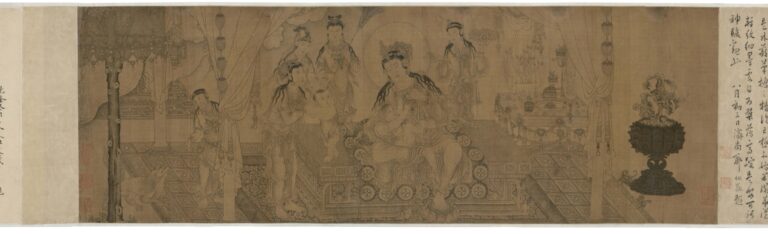
Read TK0200 as a Buddhist narrative handscroll: trace its palace setting, infant, attendants, and inscriptions while keeping the proposed scene and attribution clearly uncertain.
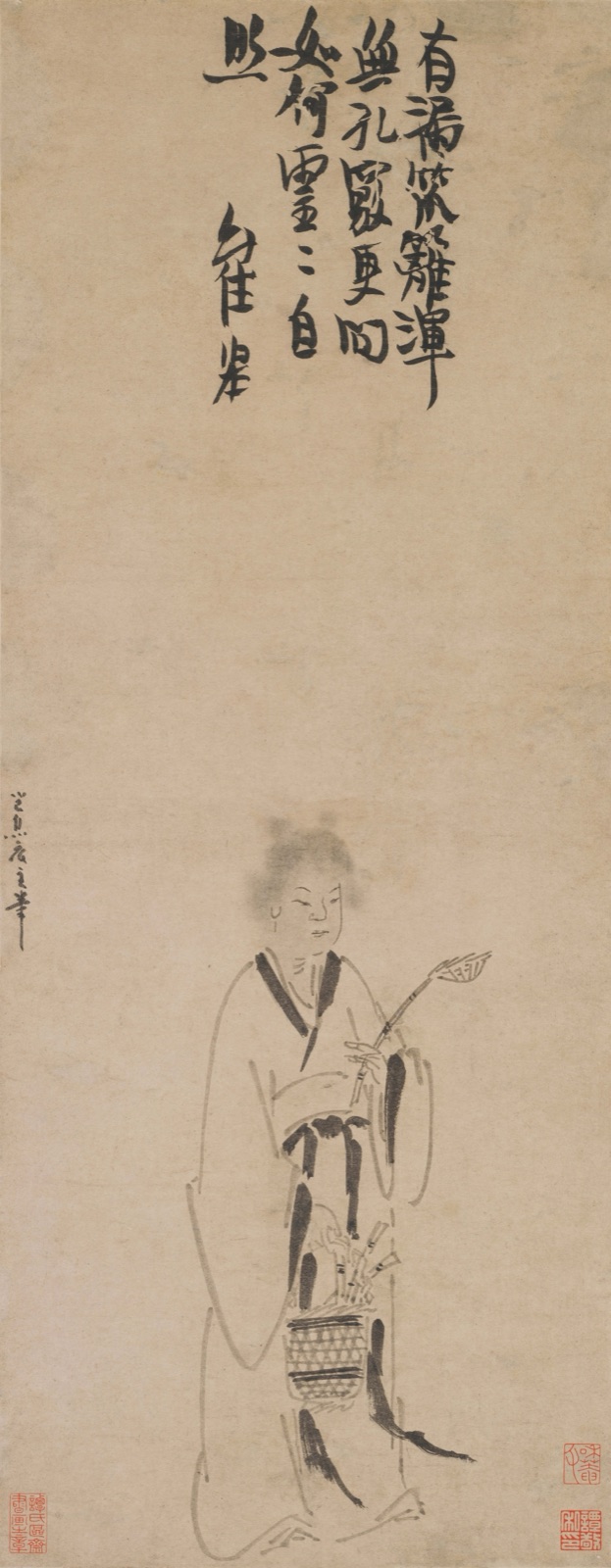
Learn how the fish basket identifies a Guanyin manifestation, what the legend says, and how to separate visible clues from uncertain dating or attribution.
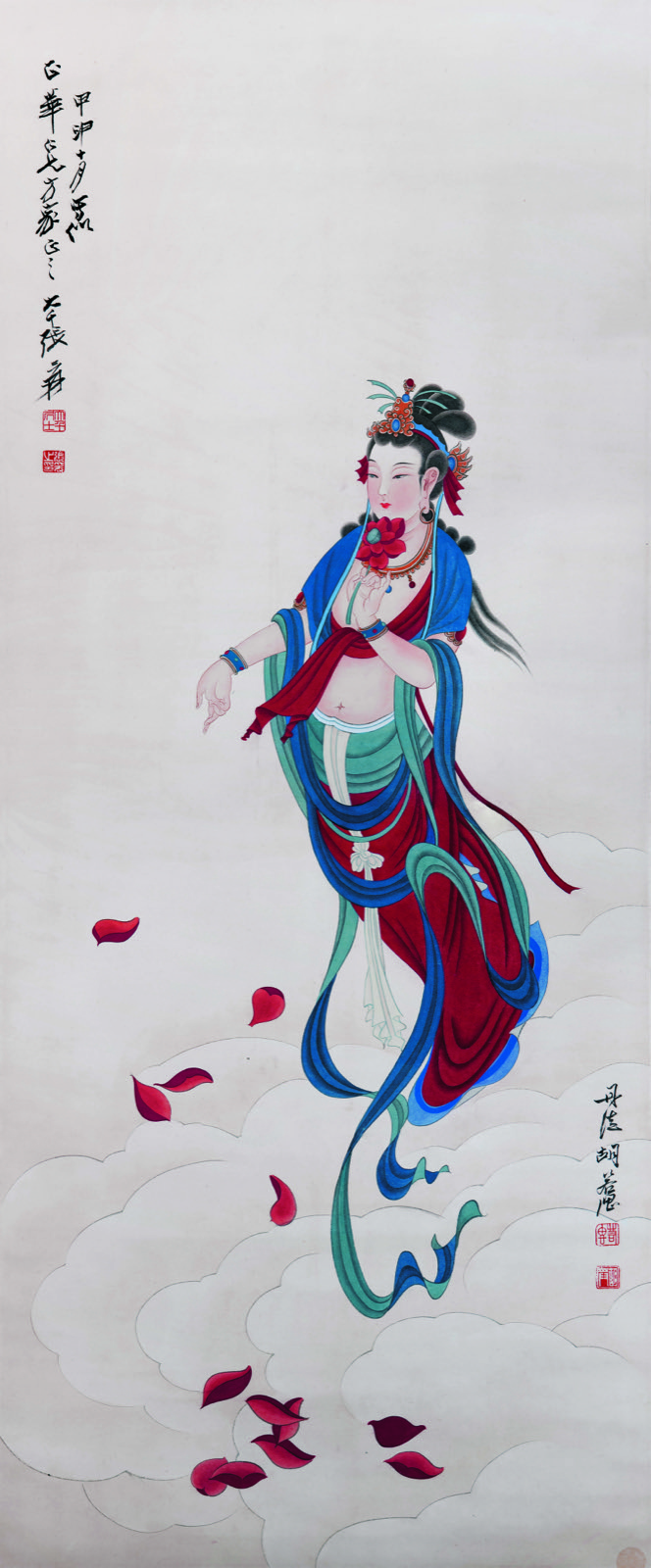
A practical guide to paper as a Buddhist painting support: distinguish the image sheet from its scroll mount, describe surface clues, and record condition without guessing.
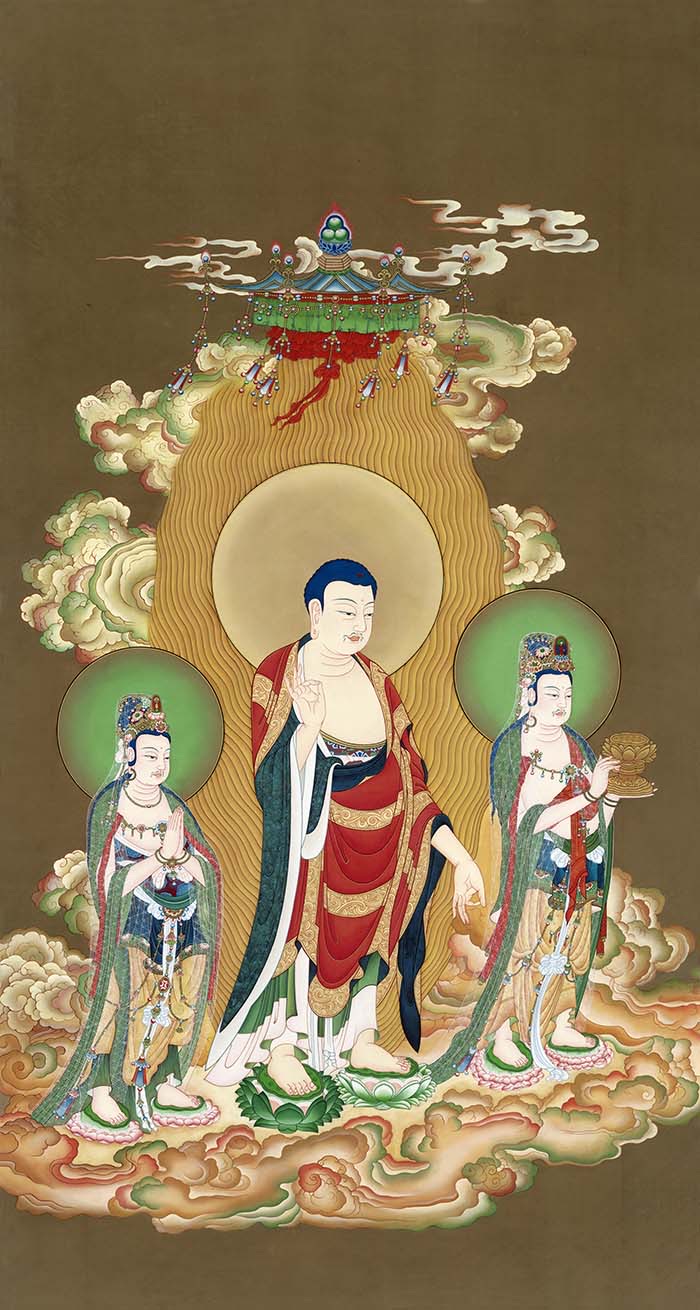
Compare crowns, hair, halos, and canopy in Buddhist group painting TK1111, with a close-looking checklist that keeps visible evidence separate from uncertain identity.
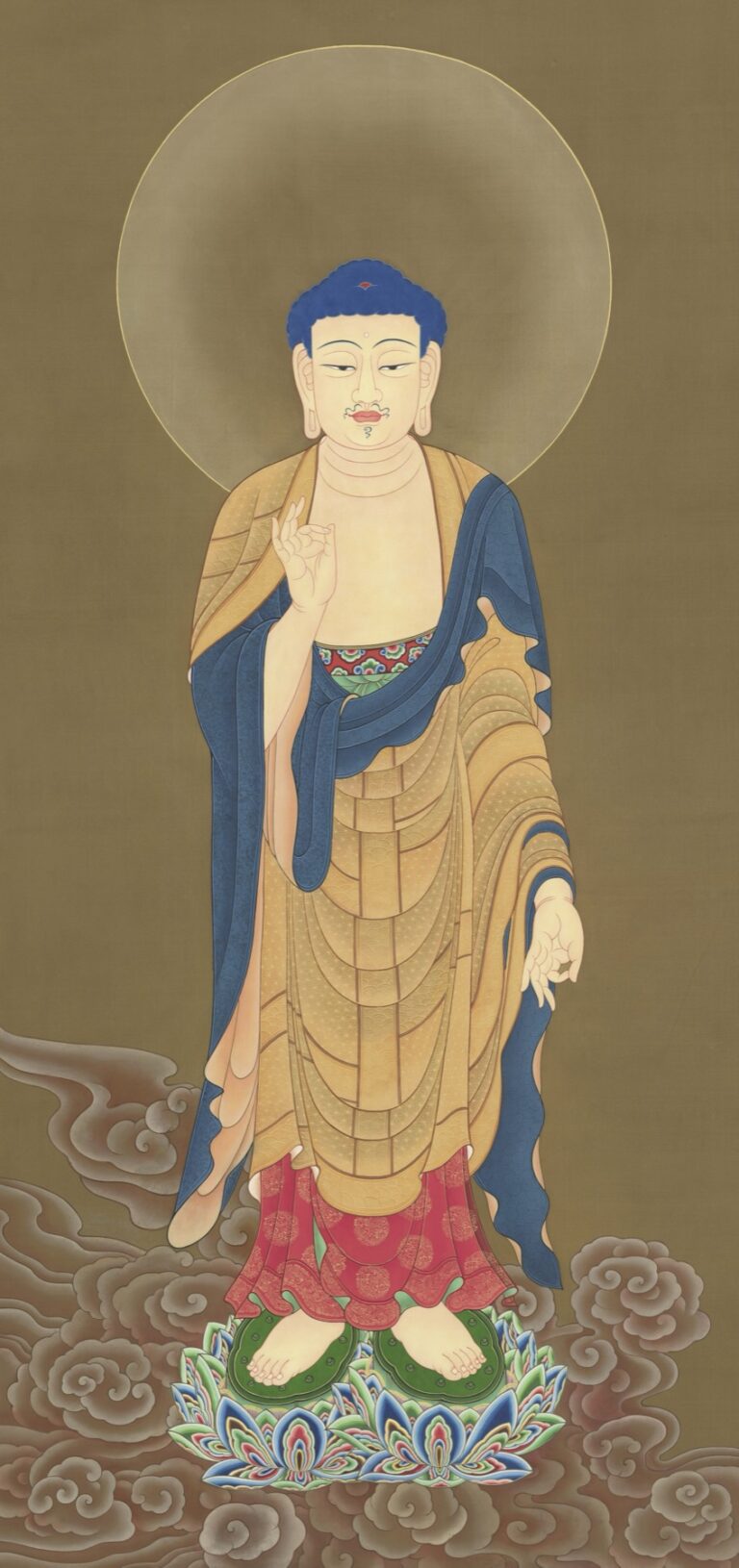
A visual checklist for TK1110’s warm gold robe, cool blue mantle, red-green lotus, and uncertain identity.
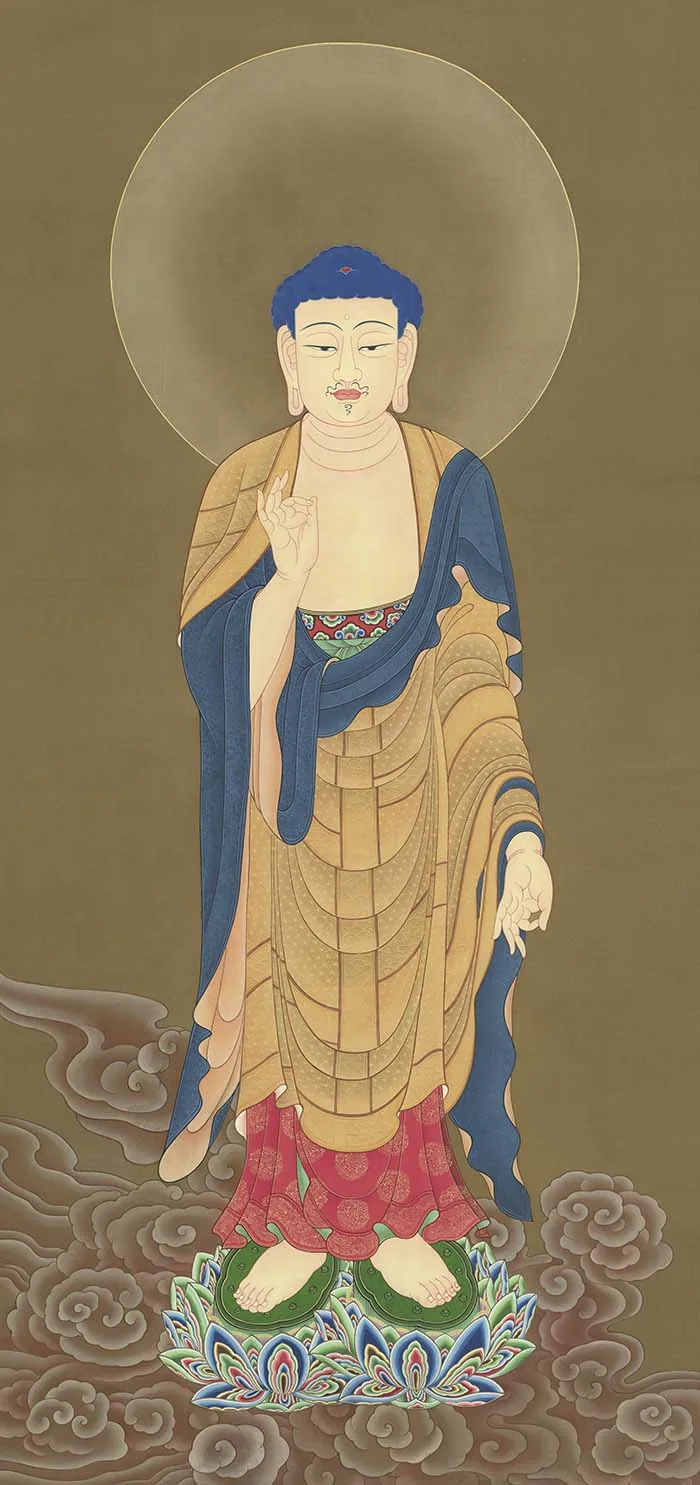
A practical comparison of Amitabha and Amitayus in Buddhist art, using attributes, clothing, gesture, context, and documented uncertainty to read images carefully.
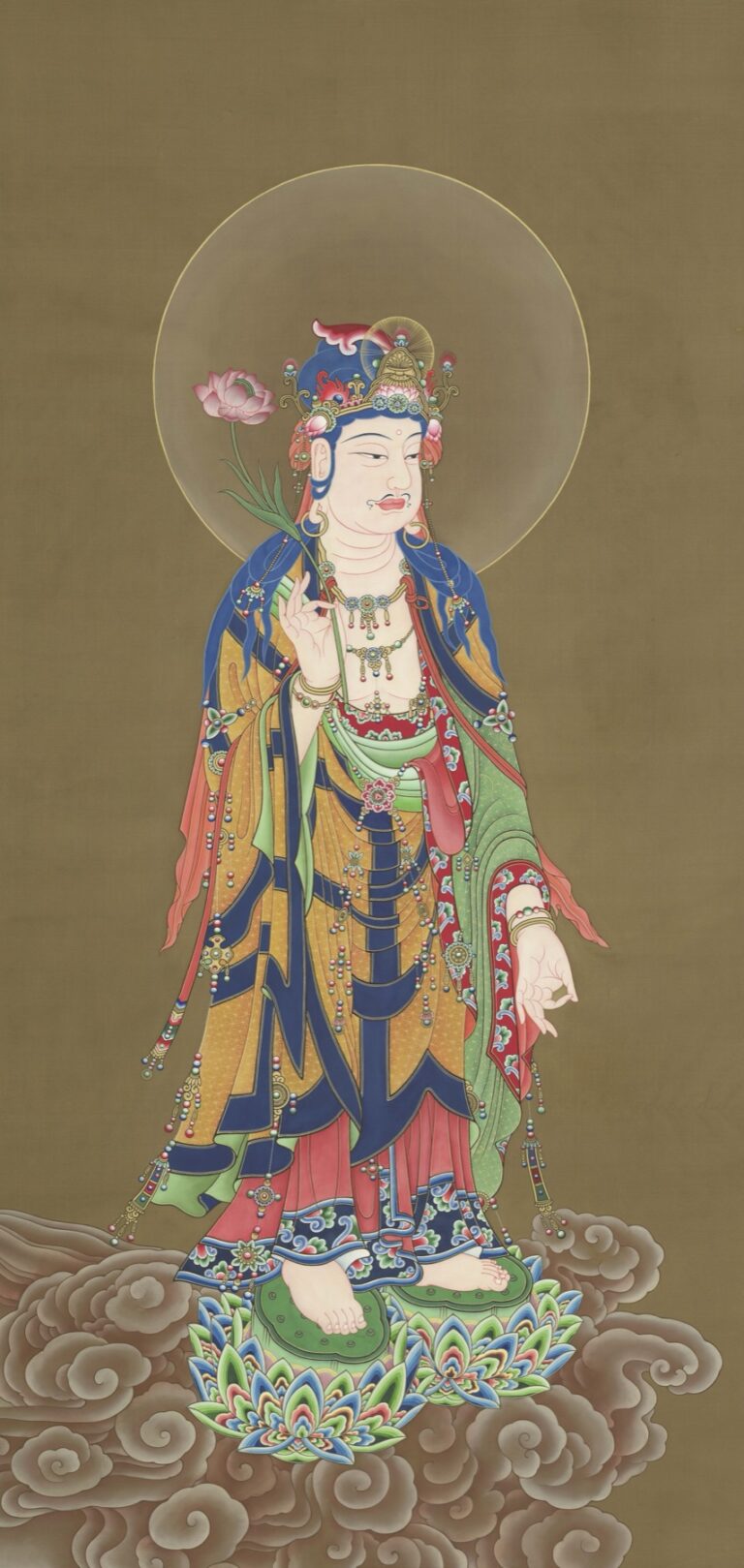
A close-looking guide to layered garments in Buddhist art: trace color bands, overlapping edges, jewelry, and drapery in TK1106 without guessing identity or date.
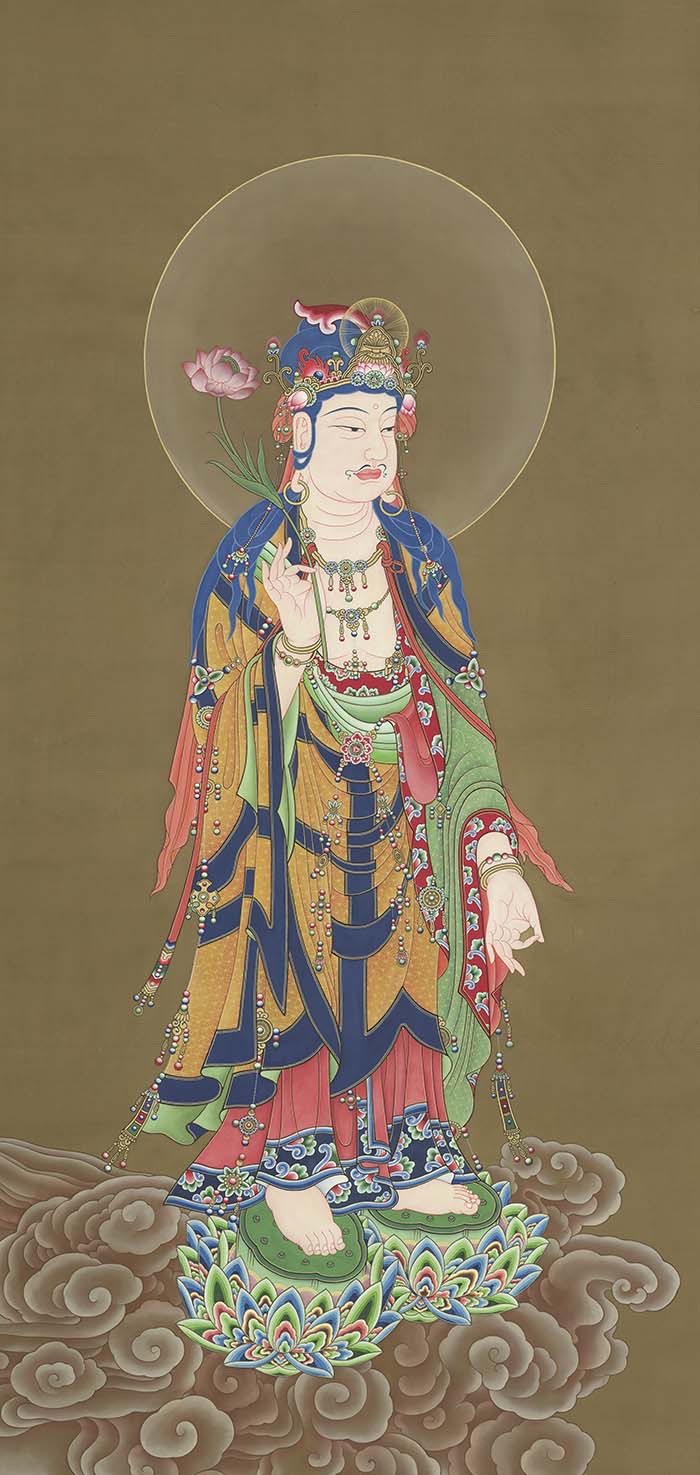
A close-looking guide to a lotus stem in Buddhist painting: trace the hand, stem, blossom, and context while keeping the figure’s identity uncertain.
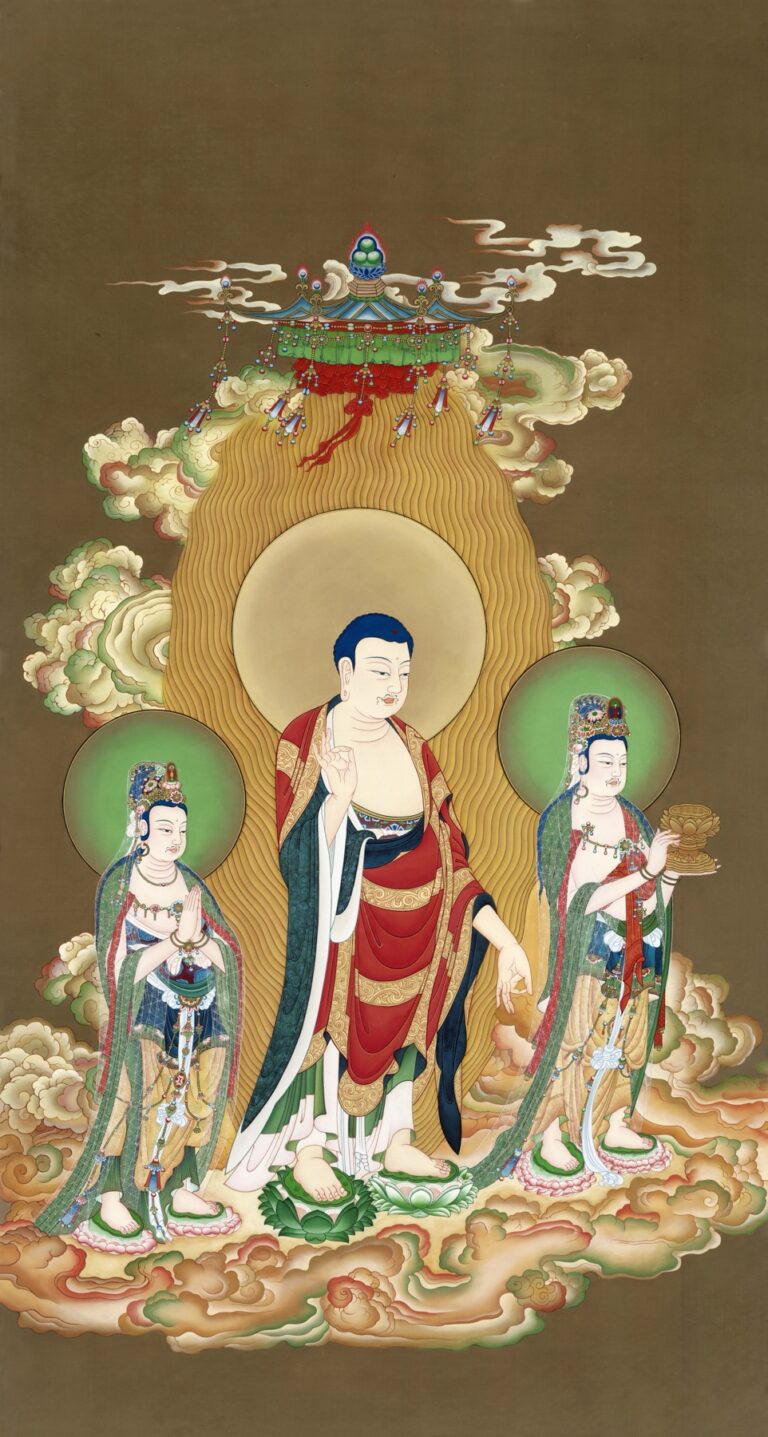
A visual method to document roof-shaped jeweled canopies in Buddhist painting, distinguish them from trees or parasols, and avoid unsupported claims.