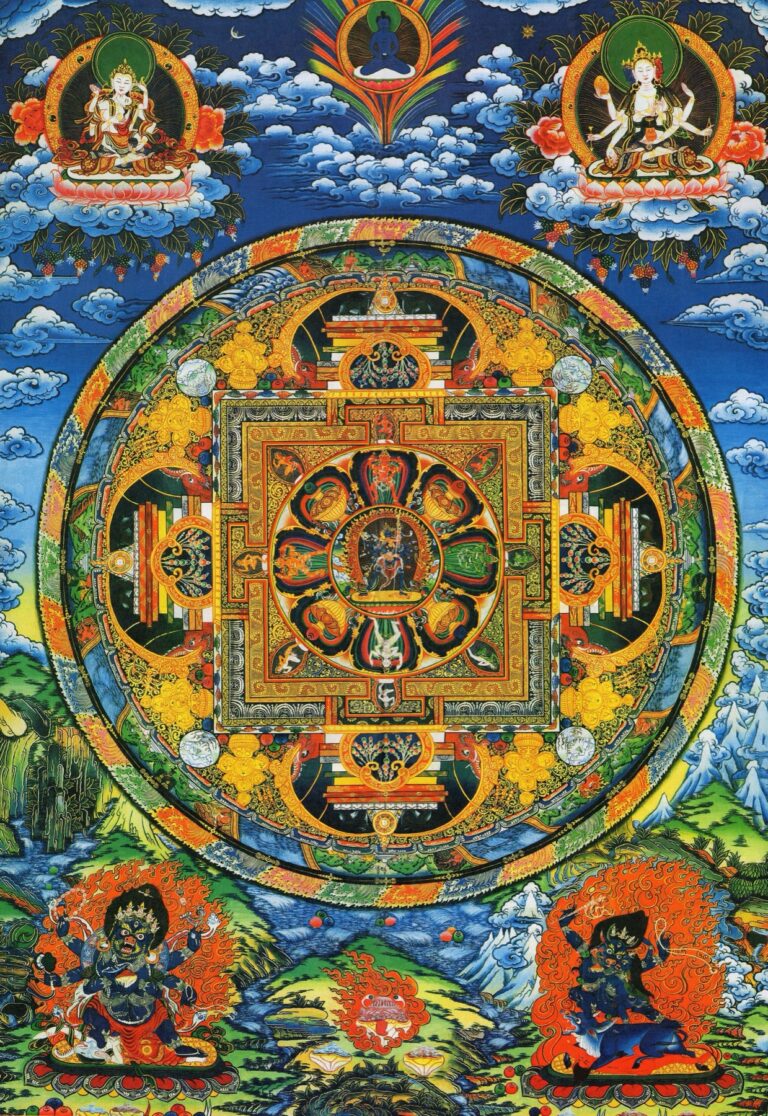
Mandala Boundary Rings: How to Read a Sacred Enclosure
Learn how to read Mandala boundary rings through enclosure, gates, patterned bands, outer landscape, and a practical visual checklist.

Browse the journal
Thangka Basics introduces the visual language of thangka painting for readers who are new to Tibetan Buddhist art. These guides explain how figures, gestures, attributes, colors, halos, lotus seats and surrounding deities work together within a carefully structured composition. They also clarify the difference between a devotional image, an iconographic teaching aid and a mandala used to organize a complete sacred world.
Start by observing the central figure, then move outward through posture, hand gestures, symbolic objects, secondary figures and the landscape. This method makes a complex image easier to understand without reducing it to decoration. The category also covers common formats, materials, proportions and practical vocabulary that can help students compare related works across the Thangka World image collection.
If this is your first visit, begin with How to Read a Thangka: A Beginner’s Guide. It provides a step-by-step framework you can reuse when studying Buddha images, bodhisattvas, protectors and mandalas.
Continue with What Is a Thangka? for essential context, the high-resolution iconography study method for close looking, the Thangka condition report checklist for collection research, and the JPG vs TIF guide for image-format decisions.
Learn how to read Mandala boundary rings through enclosure, gates, patterned bands, outer landscape, and a practical visual checklist.
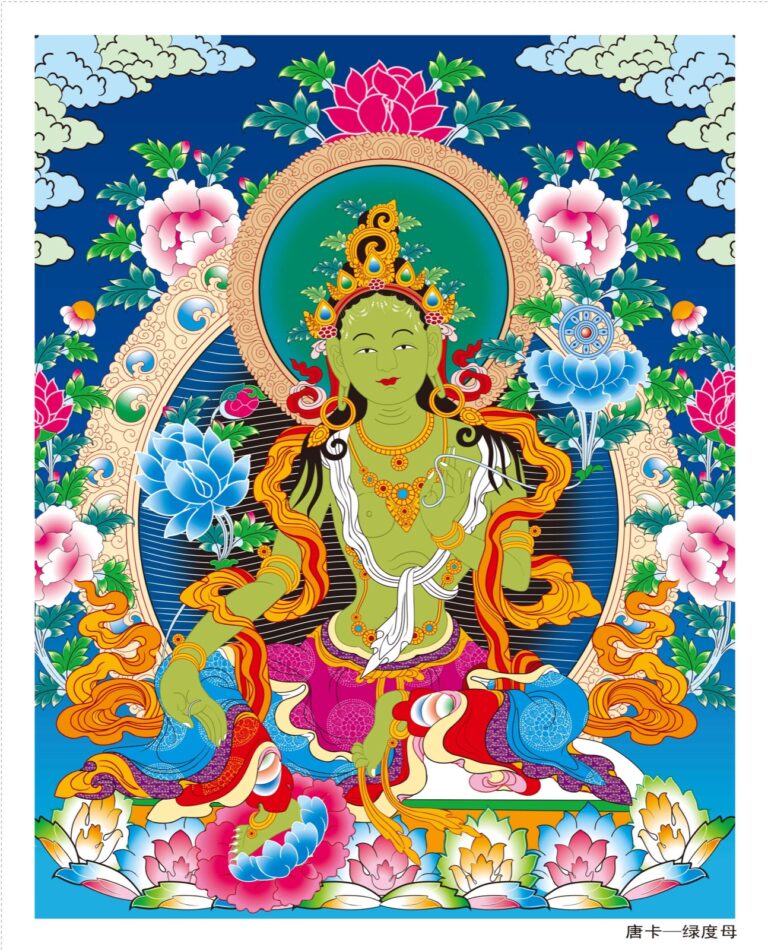
Learn how to read a lotus throne in Buddhist art through petals, tiers, color, placement, and a careful checklist for Thangka images.
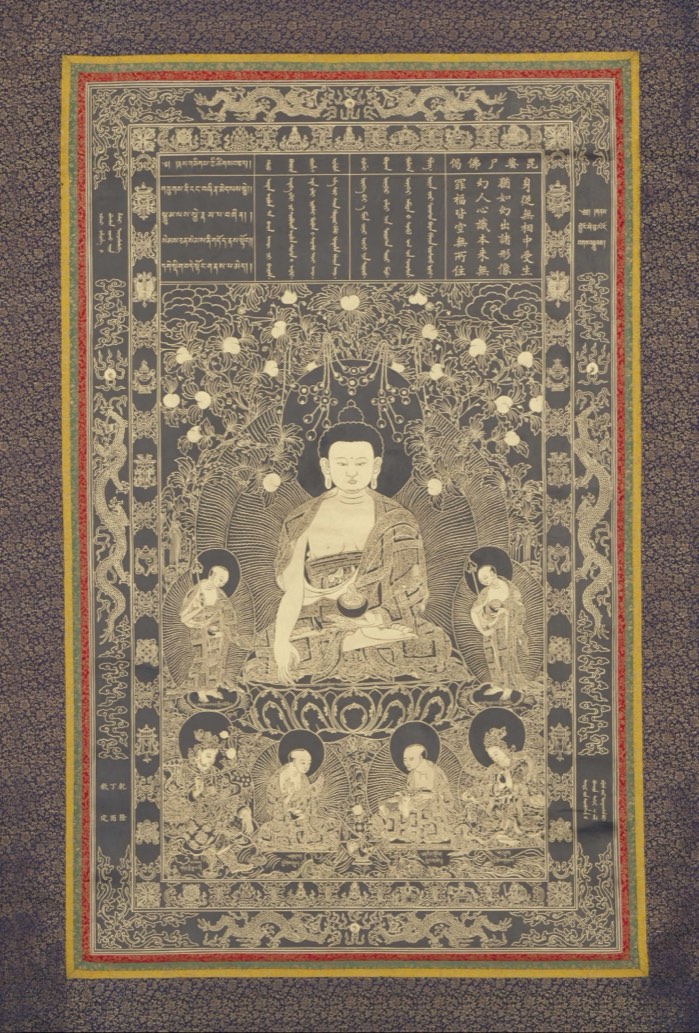
Learn how to document Thangka borders, textile surrounds, frames, inscriptions, condition, and later alterations without overstating what an image proves.

Learn how patterned scroll cover textiles can reveal mounting history, condition, and use—and how to document them without guessing fiber, date, or origin.
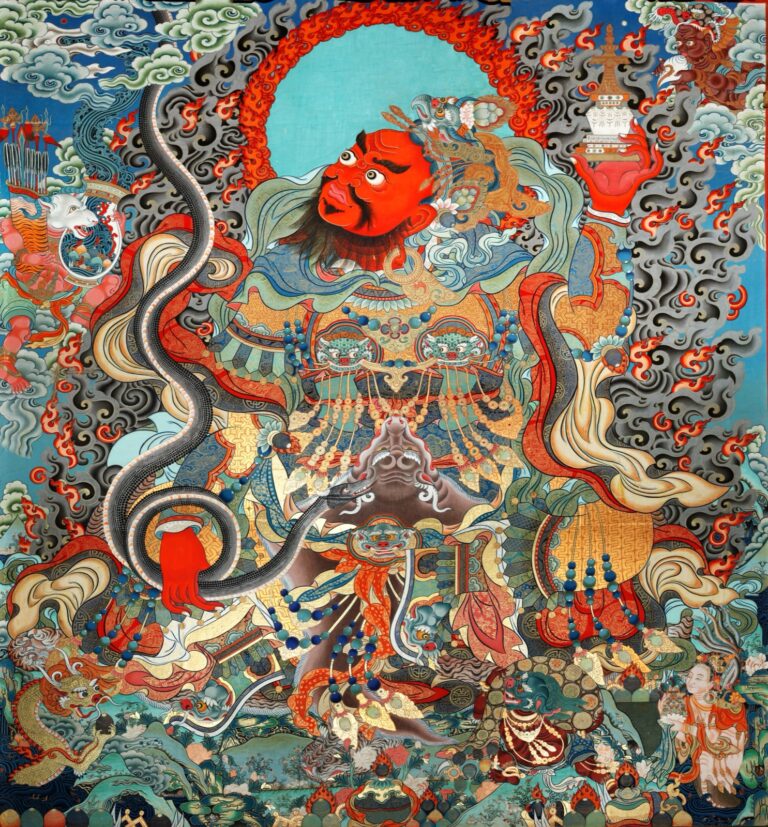
Learn how scale, gaze, serpents, flames, smoke, negative space, and retinues create movement in wrathful Buddhist art without guessing identity.
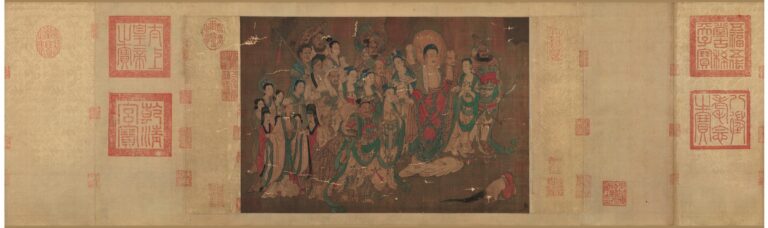
Read Dipankara Buddha in art through the standing Buddha, kneeling ascetic, gathered witnesses, handscroll format, and collector seals.
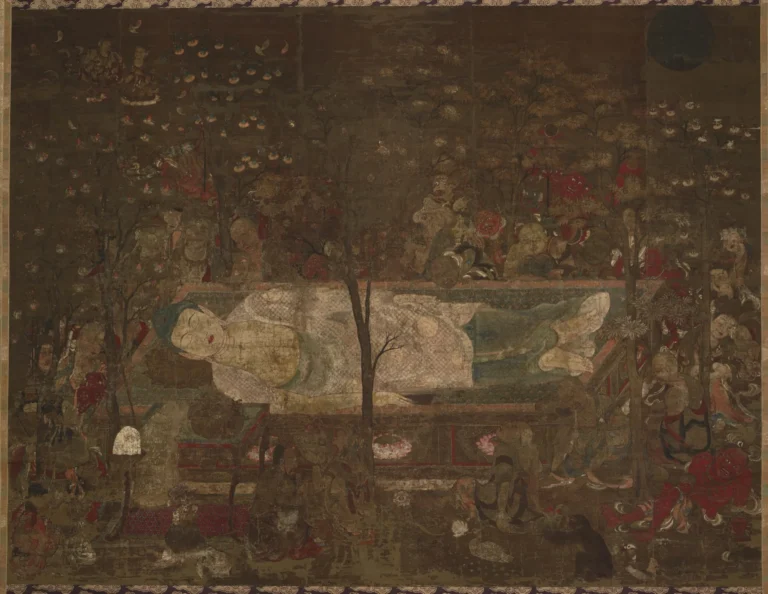
Learn how to read Buddha's Parinirvana in art through the reclining Buddha, mourners, animals, sal trees, ritual context, and careful evidence.
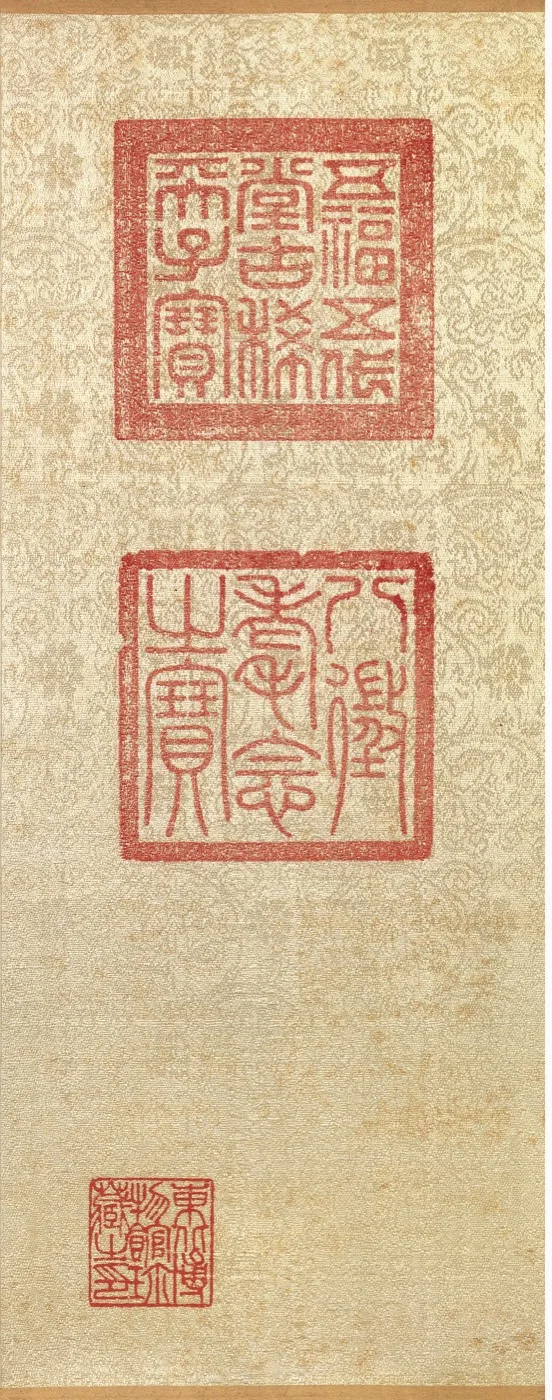
A practical guide to documenting Buddhist painting seals through placement, shape, script, impression quality, mounting context, and provenance evidence.

A practical thangka condition report checklist for recording structure, creases, pigment loss, stains, support damage, photographs, and conservation priorities.
A practical method for studying thangka iconography with high-resolution images, from central figures and attributes to inscriptions and provenance.